Mortise and tenon joints in an oak veranda
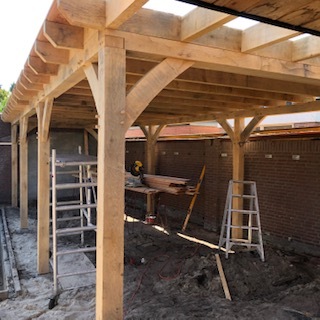
In a mortise and tenon joint, a tenon cut on the end of one beam fits exactly into a mortise in the other. An oak peg through both locks it. That is how we join posts to beams and braces in all our classic and modern verandas, with no screws or metal brackets.
Why it is stronger than screws
With a screw, a thin steel shank carries the load. With a mortise and tenon, the timber itself carries it across the whole face of the tenon. The joint cannot twist, so the frame stays true for years.
Types
- Through tenon: shows on the far side, traditional and easy to check.
- Blind tenon: hidden from view.
- Pegged: an oak peg draws the joint tight. This is how we lock our frames.
Ready to assemble
In our kits every tenon and mortise is already cut. The parts are numbered and you tap the pegs into the pre-drilled holes, leaving them proud or sawing them flush. See the self-assembly guide, plus the half-lap and dovetail joints.
Get a price
The calculator gives you an instant price for our standard models. Treat those models as a starting point: every project is made to the customer's own specification, in any size you want. Need a size or layout the calculator does not offer? Send us your sketch through the contact page or on WhatsApp.
Frequently asked questions
Does it work in Douglas fir?
Yes. Douglas fir is softer than oak and the joint is just as secure.
Any tip for assembly?
A little grease on the tenon helps it slide in. Only drive the peg fully home once everything is square.
More about timber verandas
- Wooden verandas made to measure
- Oak framed veranda
- Douglas fir veranda
- Timber frame veranda kits
- Modern black veranda
- Luxury garden canopies
- Modern veranda
- Pool house
- Build a wooden shelter
- Building a shed
- Self-assembly guide
- Timber frame joints
- What does it cost?
- Planning permission
- Lifespan and maintenance
- Oak frame kits
- Oak garden buildings
- Luxury garden room
- Garden room with veranda
- Oak or Douglas fir
- Installing a veranda
- Projects with photos
- Price your veranda