Timber frame joints: mortise and tenon, half-lap and dovetail
Deliverytime UK
7 to 14 days delivery time
For Fence and Decking
Free delivery from £4300
Up to £4300 delivery charge £250
Parcel service (small box) delivery £26
- Free delivery from £4.300
- Delivery in 14 days
- Up to £4.300 delivery charge of £250
Ipe packages
Large timber bundles
Delivery time about 8 weeks
Delivered in 15 days
Package L
From £ 4.300 free deliveryPackage XL
From £ 4300,- free delivery7 to 14 days delivery time
Package L
From £ 4300 free deliveryPackage XL
From £ 4300,- free delivery7 to 14 days delivery time
Package L
From £ 4300 free deliveryPackage XL
From £ 4300,- free delivery15 days delivery time
Package L
Delivery price on requestPackage XL
Delivery price on requestCarports · Traditional Joinery · Oak & Douglas Fir
Traditional Joinery: How Our Bespoke Carports Are Made
High-end quality isn't created in a factory, it's created in the joint. Every timber frame we deliver, in solid Oak or Douglas fir, is hand-crafted using traditional mortise and tenon joints and half-lap joints, with no visible screws. This page shows what that craftsmanship looks like in practice, from the first sketch to the finished frame.
More about timber verandas
- Wooden verandas made to measure
- Oak framed veranda
- Douglas fir veranda
- Timber frame veranda kits
- Modern black veranda
- Luxury garden canopies
- Modern veranda
- Pool house
- Build a wooden shelter
- Building a shed
- Self-assembly guide
- What does it cost?
- Planning permission
- Lifespan and maintenance
- Oak frame kits
- Oak garden buildings
- Luxury garden room
- Garden room with veranda
- Mortise and tenon
- Oak or Douglas fir
- Installing a veranda
- Projects with photos
- Price your veranda
Mortise and tenon, half-lap: the foundation of every bespoke carport
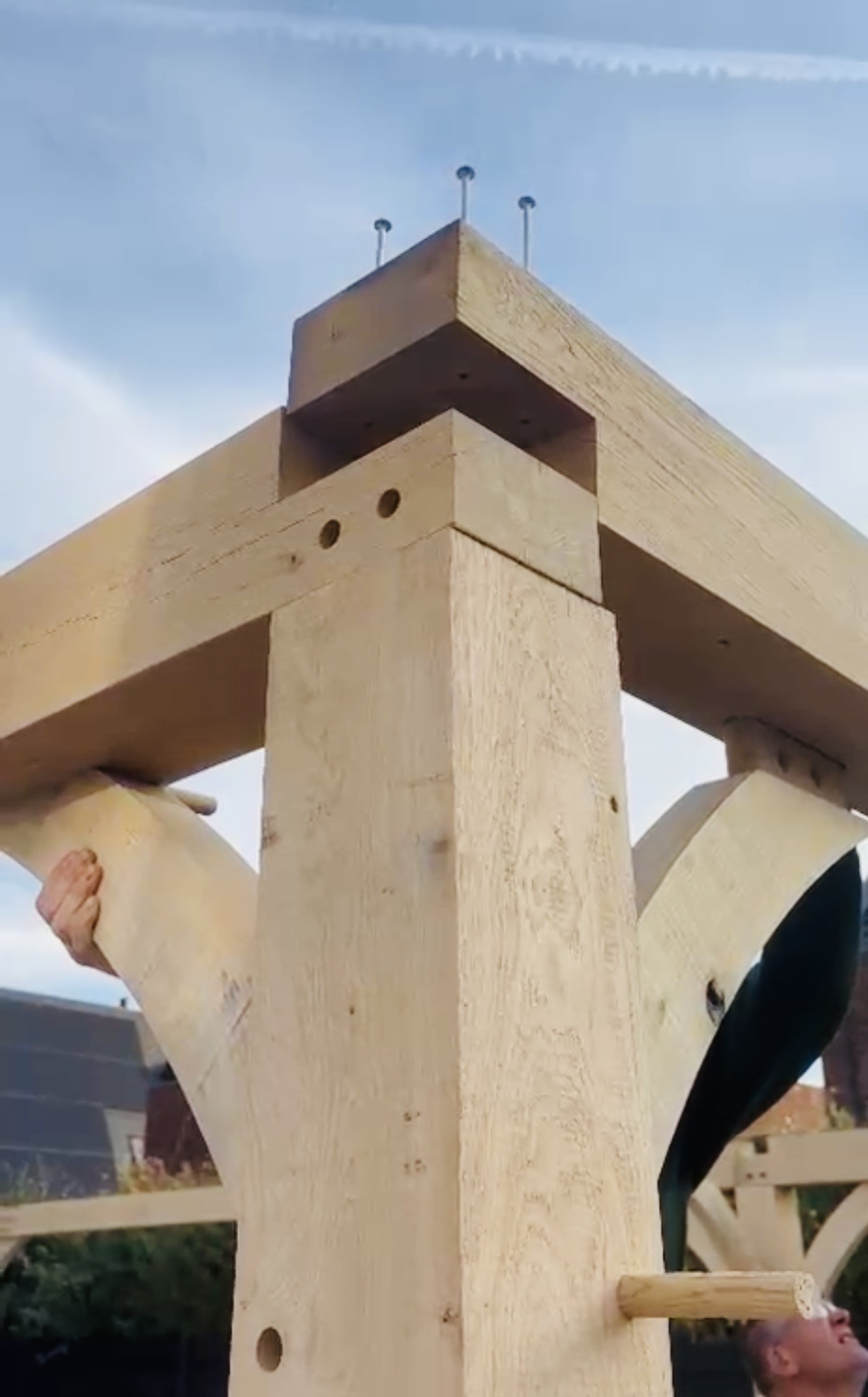
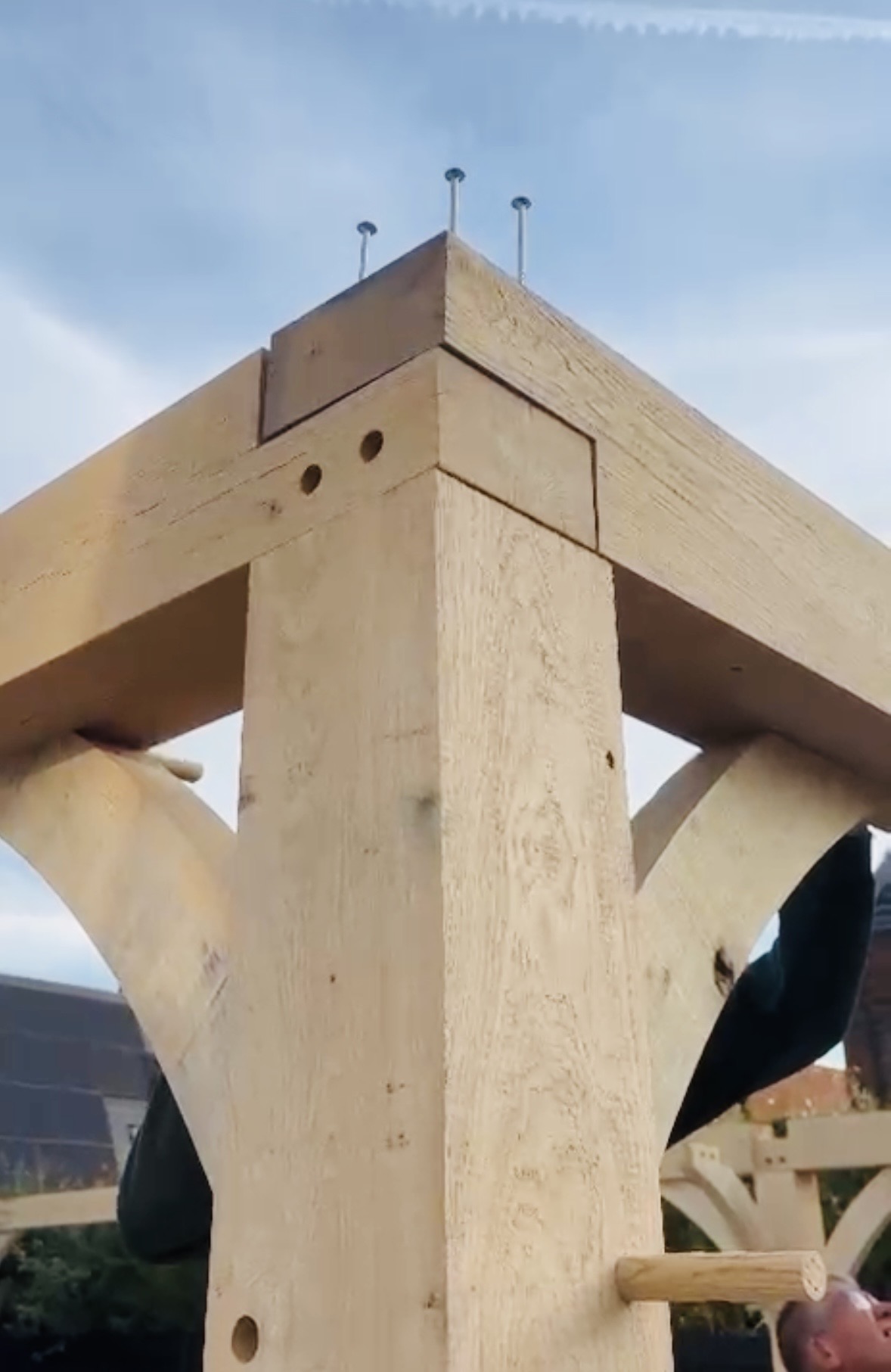
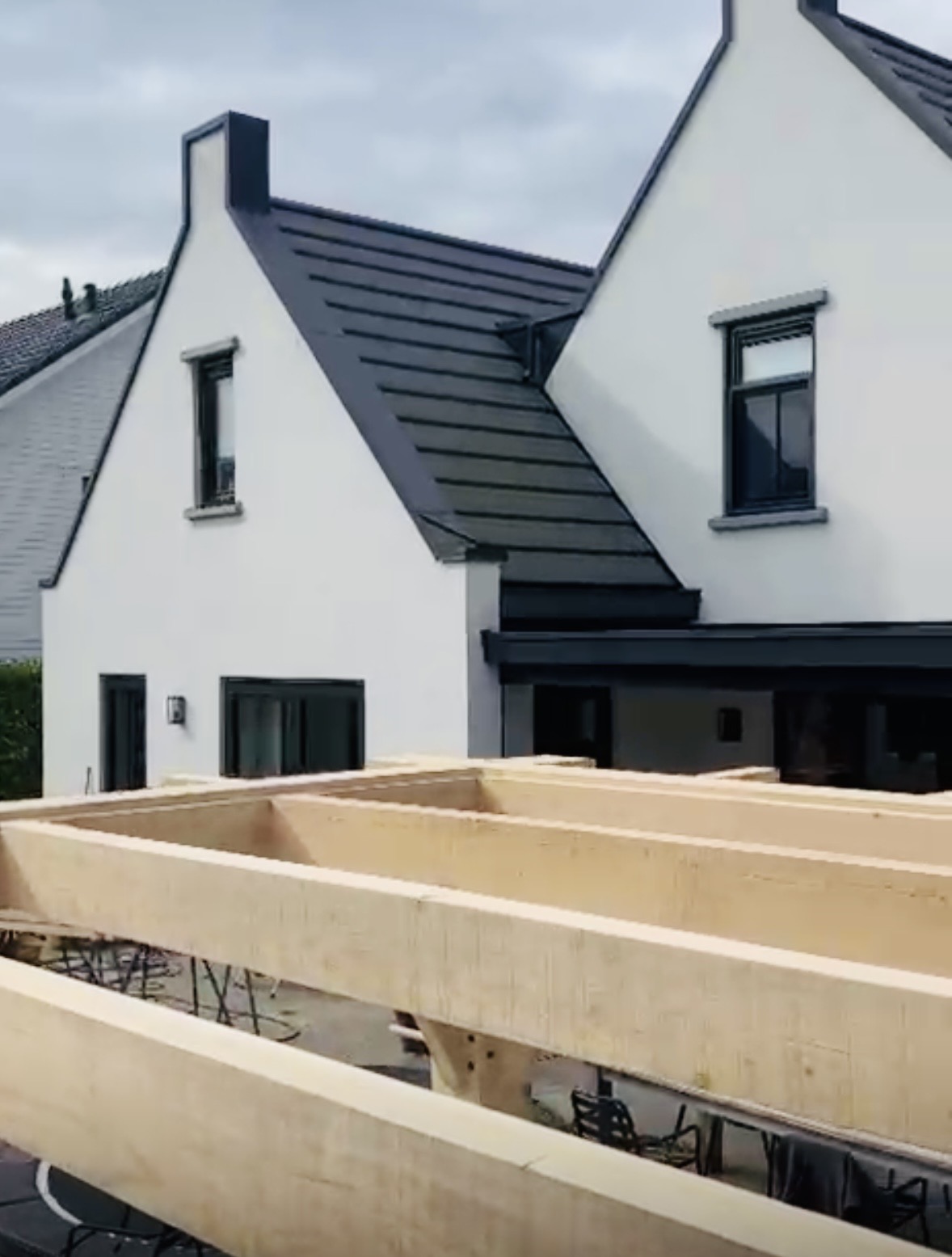
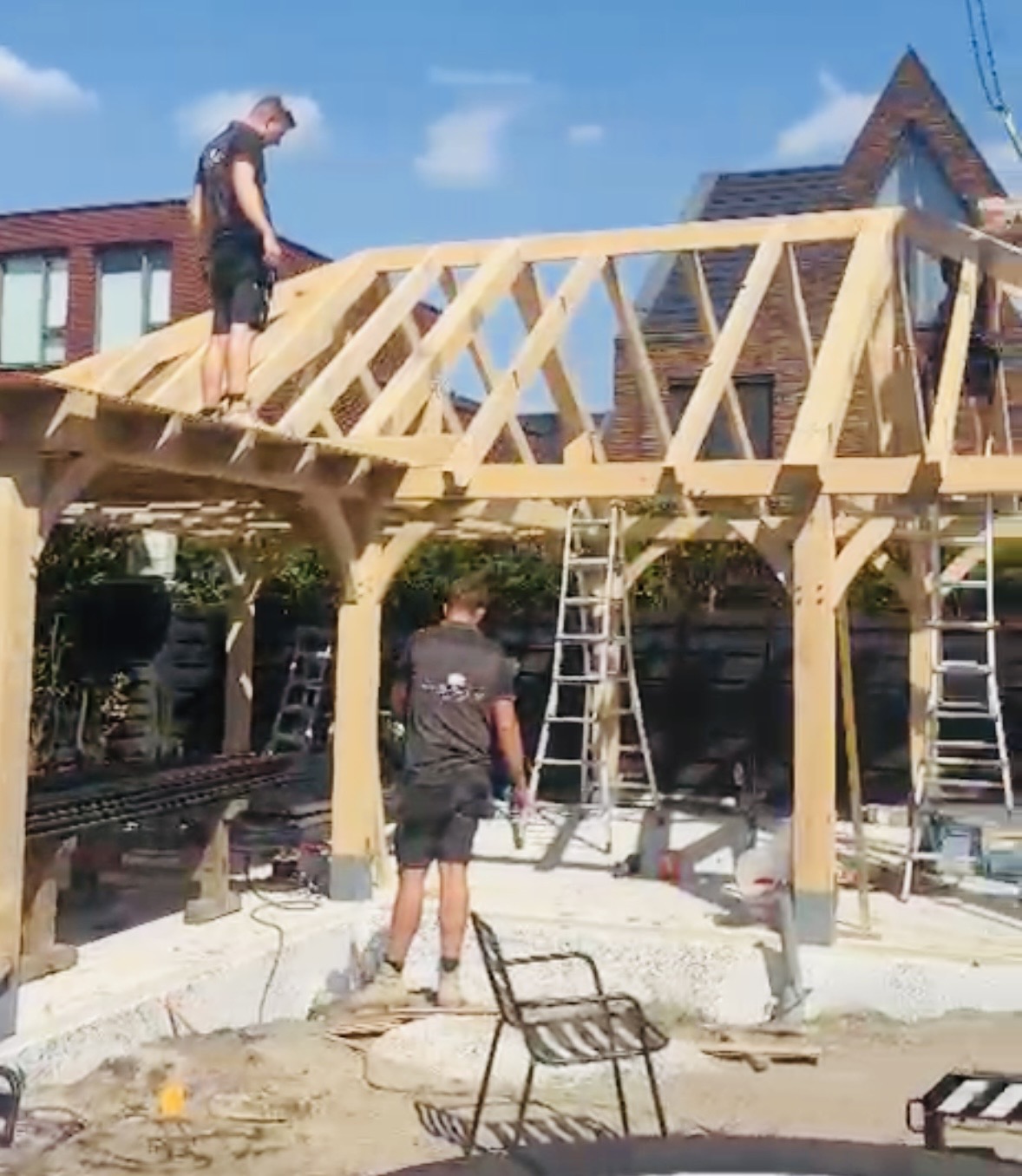
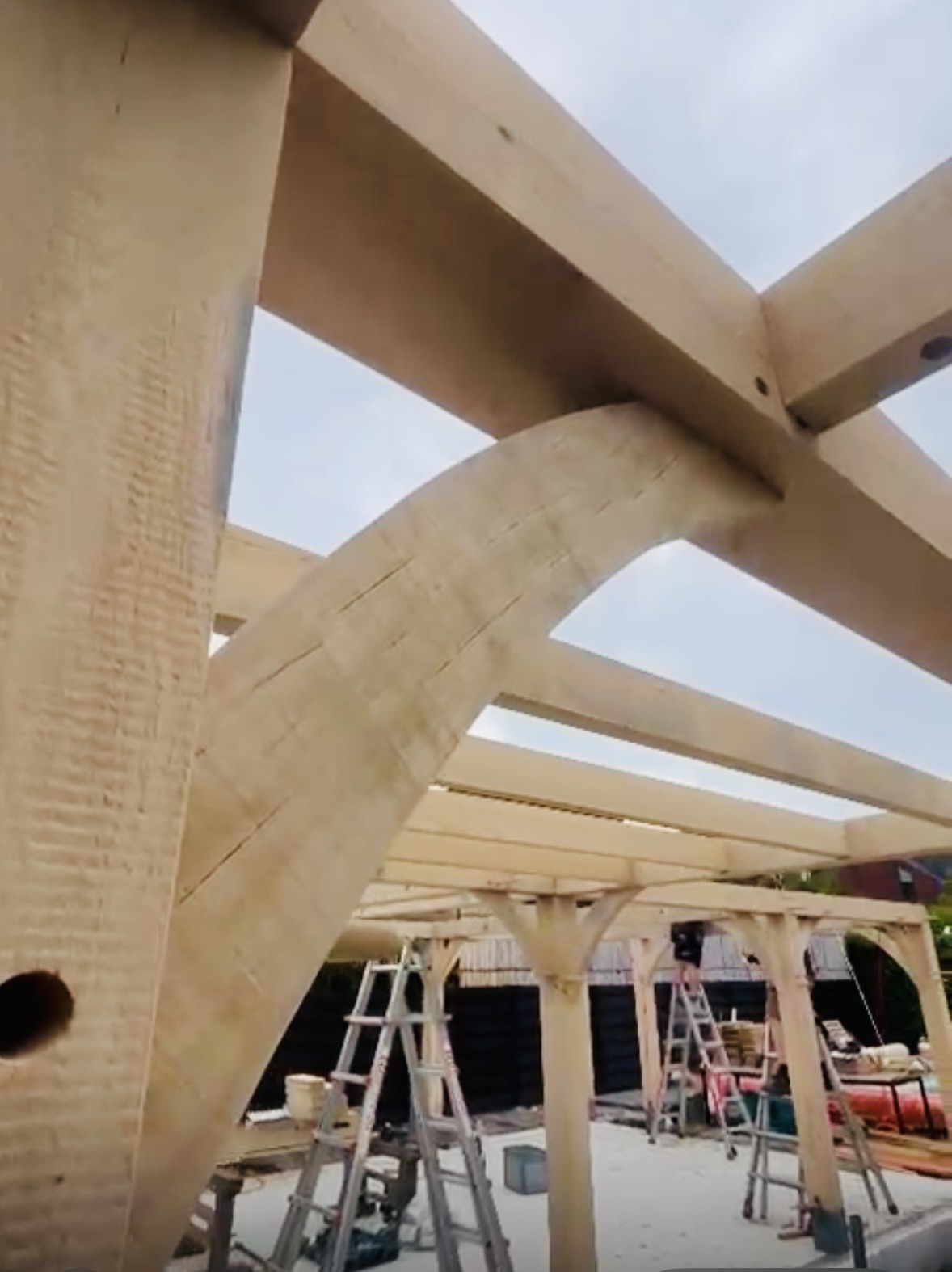
What sets a high-end carport apart from a flat-pack kit isn't the paint finish or the dimensions, it's the joint. Every frame we build, whether in Oak or Douglas fir, is hand-crafted using a mortise and tenon joint: a projecting tenon that fits exactly into a mortise cut in the connecting beam, secured with a wooden dowel instead of a screw or bolt. On heavier structures this is reinforced with a half-lap joint, where both beams are cut away by half their thickness so they sit flush against one another.
From sketch to 3D construction drawing
Every high-end project starts with a sketch of your requirements: dimensions, layout and preferred roof shape. From that we produce a detailed 3D construction drawing, with every component of the frame already numbered. That way, you- and our craftsmen, know exactly how the structure fits together before a single beam is cut. That's the difference between true bespoke quality and a kit that happens to fit.
Gable, hip or flat roof: every shape hand-crafted
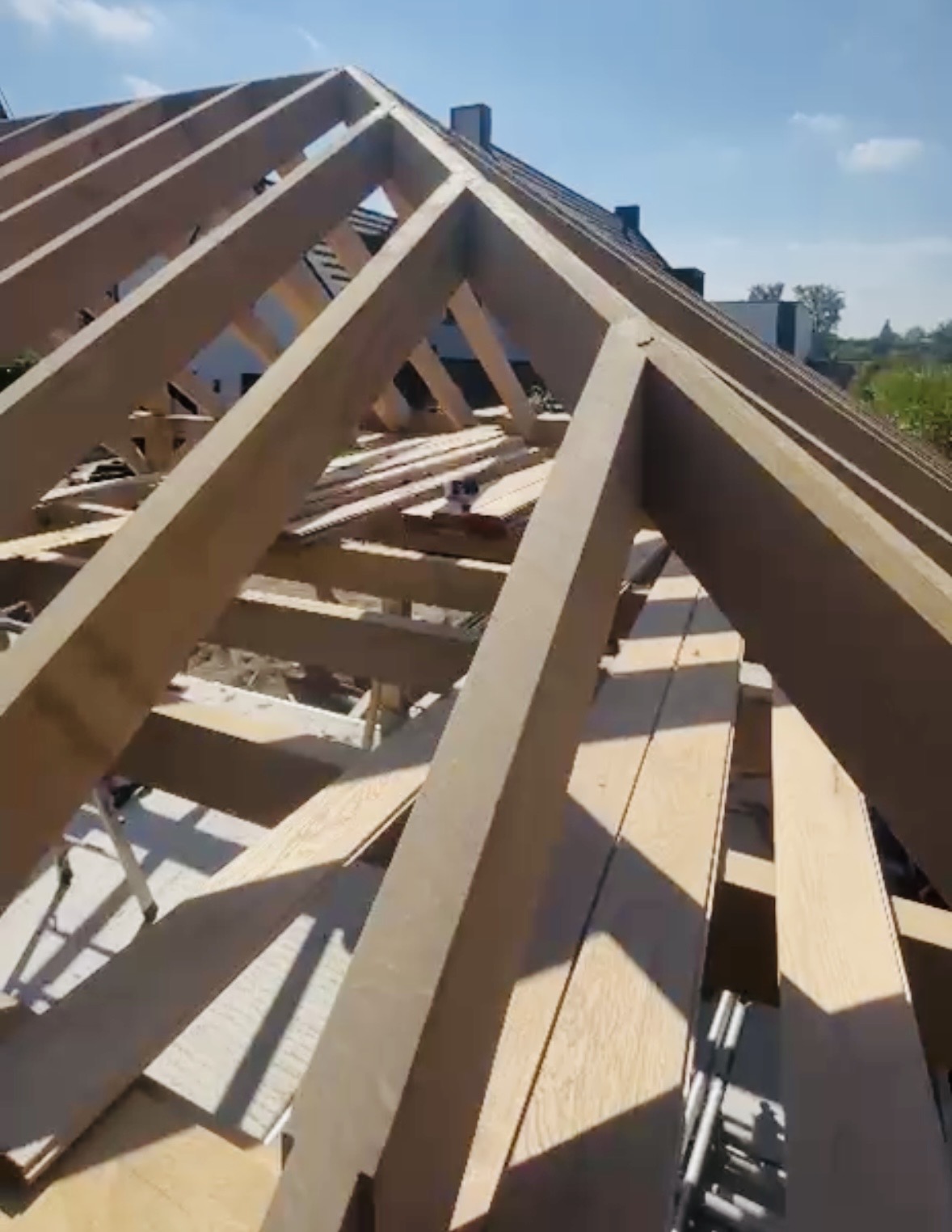
Whether you choose a classic gable roof, a stately hip roof, or a sleek flat roof, every roof shape is built with the same hand-cut mortise and tenon and half-lap joints. The roof shape defines the look; the quality of the joinery remains equally high in every case.
Oak or Douglas fir: two timbers, the same craftsmanship
Oak
Solid, heavy and exclusive, the most high-end choice for maximum durability and a robust look. View our oak carports.
Douglas fir
Warmer in tone, lighter in weight, with an excellent price-to-quality ratio, without compromising on the joinery. View our Douglas fir carports.
Whichever timber you choose, the mortise and tenon and half-lap joints, the 3D construction drawing and the finishing quality remain exactly the same. The difference lies in weight, colour and budget, not in the craftsmanship.
Self-assembly kit, or we handle the build
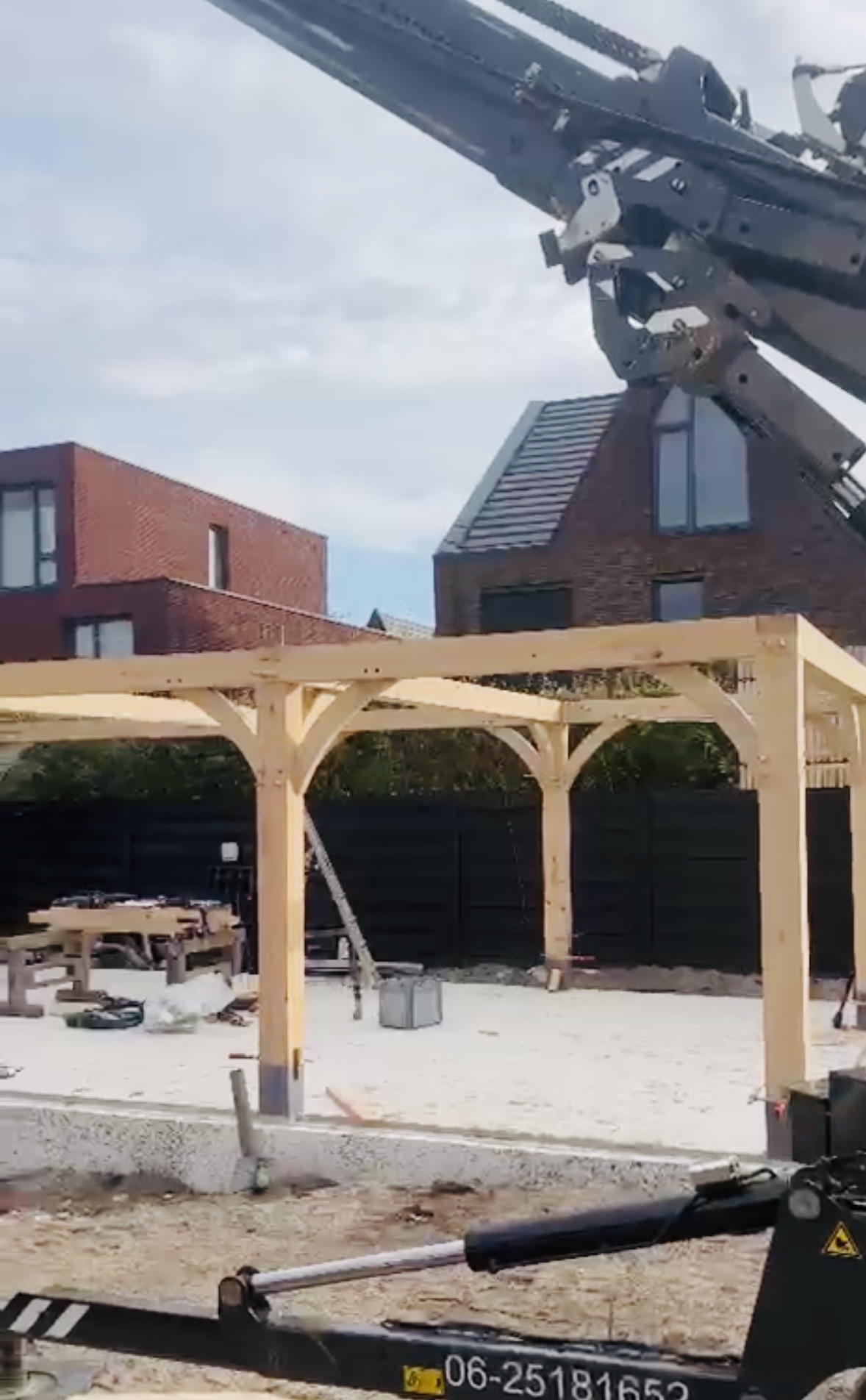
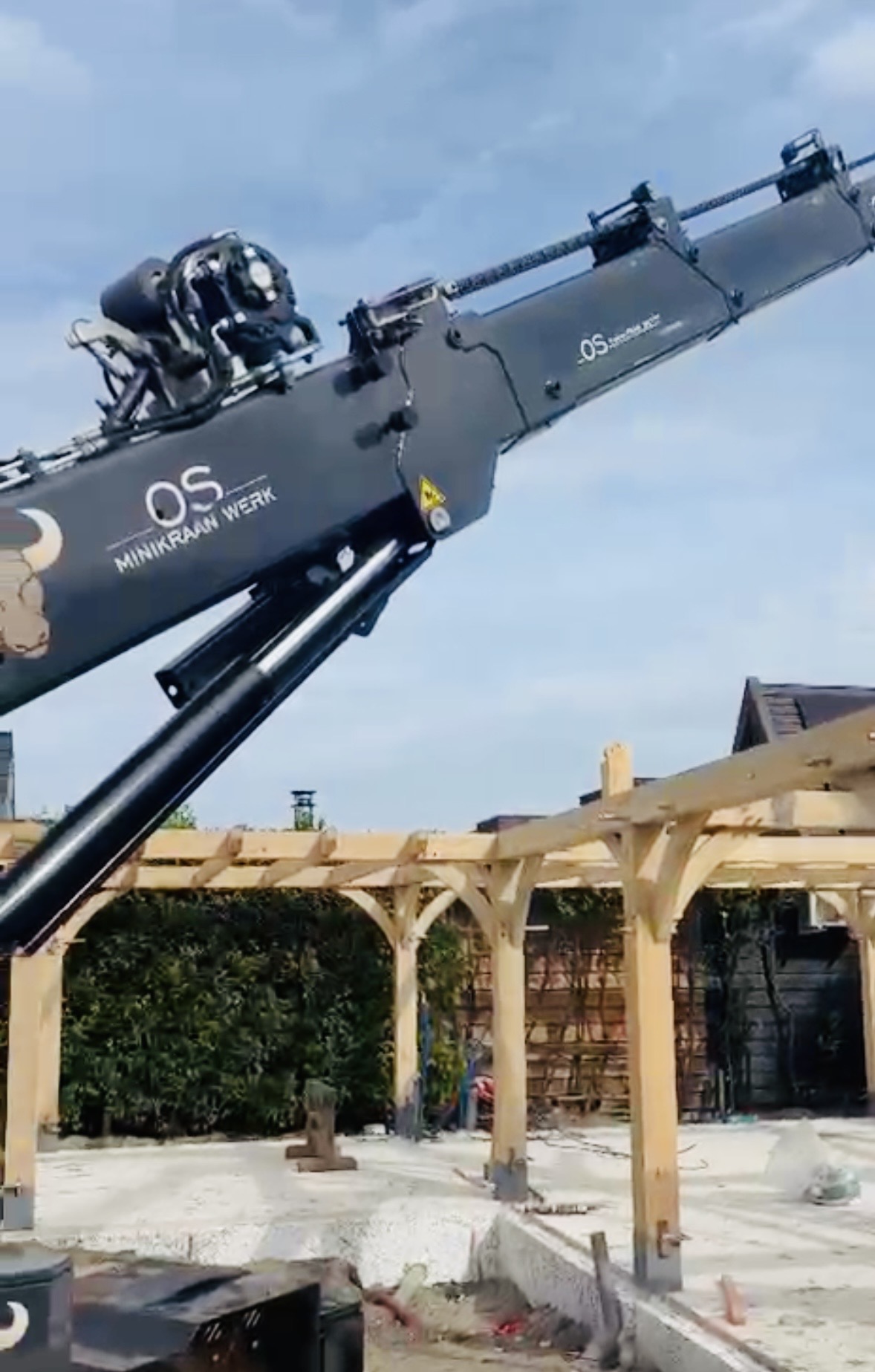
Every project is delivered as a numbered kit with a matching 2D and 3D construction drawing, so assembly is straightforward and predictable. Would rather not arrange a crane and lift the beams yourself? We can also take care of the entire build for you from the foundation and raising the first post through to the finished frame, using our own equipment and craftsmen on site.
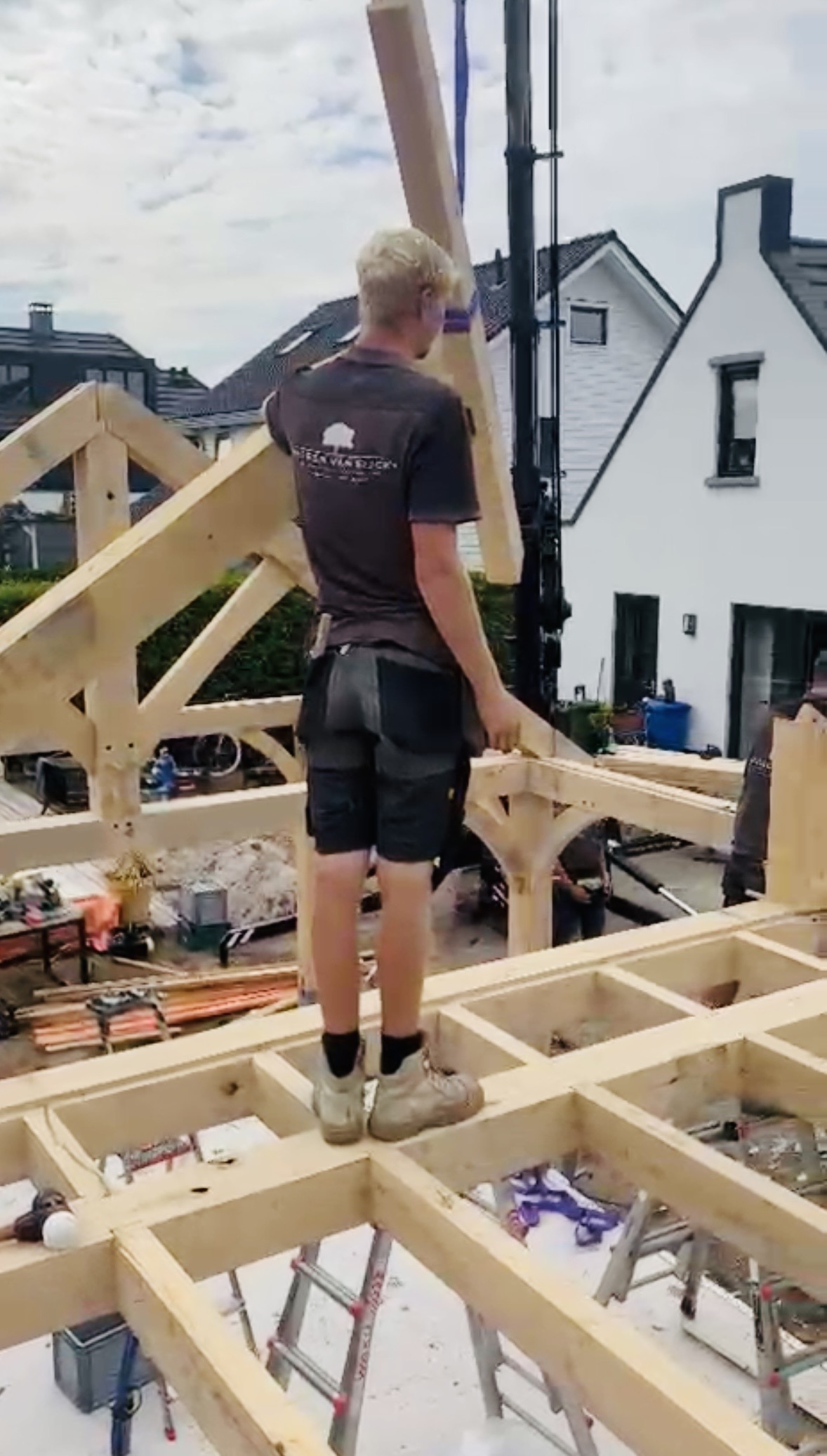
Frequently asked questions about our craftsmanship
What's the difference between a mortise and tenon joint and a half-lap joint?
In a mortise and tenon joint, a projecting tenon fits exactly into a mortise cut in the connecting beam. In a half-lap joint, each beam is cut away by half its thickness so both parts sit flush against each other. Both techniques are hand-crafted, with no visible screws.
Do I get a 2D or a 3D construction drawing?
You start with a sketch of your requirements, after which we produce a detailed 3D construction drawing with numbered components.
Which roof shapes are possible: gable, hip or flat roof?
All three are possible. The roof shape determines the look of your carport; the hand-cut joinery is applied to the same high standard regardless of roof shape.
Can I assemble the kit myself, or do you also handle the build?
Both are possible. You receive a numbered kit with a 3D construction drawing for self-assembly, or you can have the entire build, including crane work, carried out by our team.
Is oak or Douglas fir the better choice for quality?
Both timbers are worked with the same hand-cut joinery. Oak is heavier and more exclusive, Douglas fir is warmer in tone and more affordable, the quality of the joinery is identical either way.