What Is Ipe Wood? Benefits, Lifespan & Uses Explained
Knowledge Base · Hardwood Species
Native to Central and South America, Ipe wood (officially Handroanthus, and widely traded as Brazilian Walnut or Ironwood) is a tropical hardwood species. It's known as one of the hardest and most durable timbers you can buy for decking and fencing, noticeably harder and denser than familiar UK species such as oak. At Hardwood Discount, we've worked with this remarkable hardwood for years: a reliable and genuinely beautiful timber for all kinds of garden projects. We explain what Ipe hardwood is, and why it's worth the investment, below.
Why is Ipe wood so popular?
What makes Ipe wood outperform other timber species by such a margin? It comes down to its unique properties. Ipe is so hard that it's almost impossible to work with standard tools. That might sound like a drawback, but that same hardness is exactly why your decking, fencing or canopy will last 25+ years.
Customers are often taken aback by the price at first, but it's worth doing the maths properly. A Douglas fir fence, for example, gets replaced after 10-15 years. An Ipe fence lasts three times as long, so over the long run, you actually save money.
Ipe hardwood, Brazilian Walnut, Ironwood: is it all the same timber?
Yes. "Ipe", "Brazilian Walnut" and "Ironwood" all refer to the same South American hardwood species (Handroanthus, formerly classified as Tabebuia). You'll see all three names used across the UK timber trade, so if you've come across "Brazilian Walnut decking" while researching, it's the same product as our Ipe decking and Ipe fencing.
On the Janka hardness scale used to rate timber, Ipe sits far above common UK garden timbers like oak, pine or Douglas fir, which is exactly why it resists scratches, dents and general wear so well on a deck or fence that gets used every day.
Naturally resistant to rot and insects
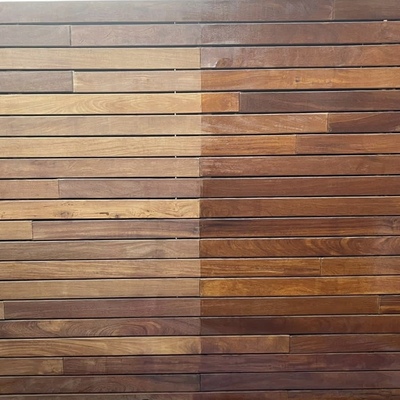
Ipe wood contains natural oils that protect it against moisture, fungi and insects. That means it doesn't need treating with chemical products. Annual staining or painting isn't necessary, saving you plenty of work and cost. Over time it may fade slightly and turn greyer through UV exposure, though many people consider that part of its appeal.
Either way, this happens more slowly than with other timber species, which is exactly what sets Ipe apart. Want to keep the original brown colour? You can treat the wood with a UV-resistant oil. An occasional clean with water and a brush is enough to maintain this hardwood. Stubborn stains come off with a pressure washer on a low setting.
What is Ipe wood best suited for?
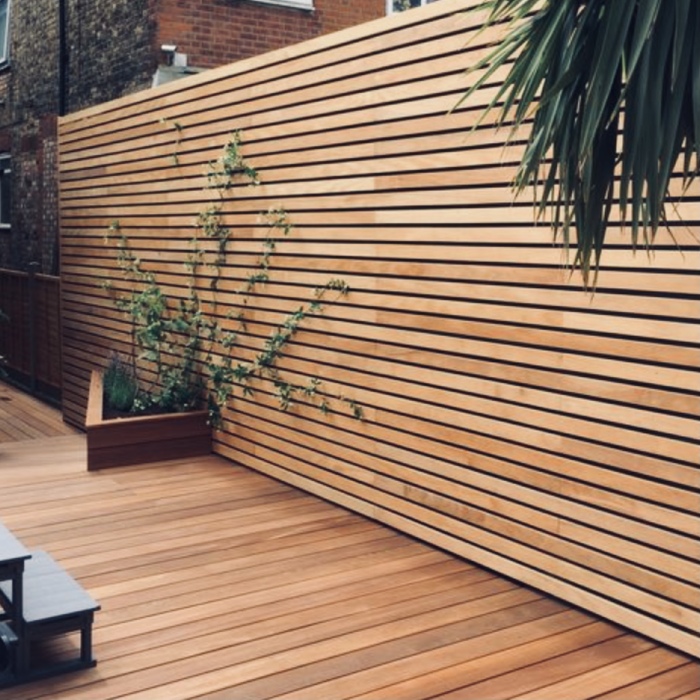
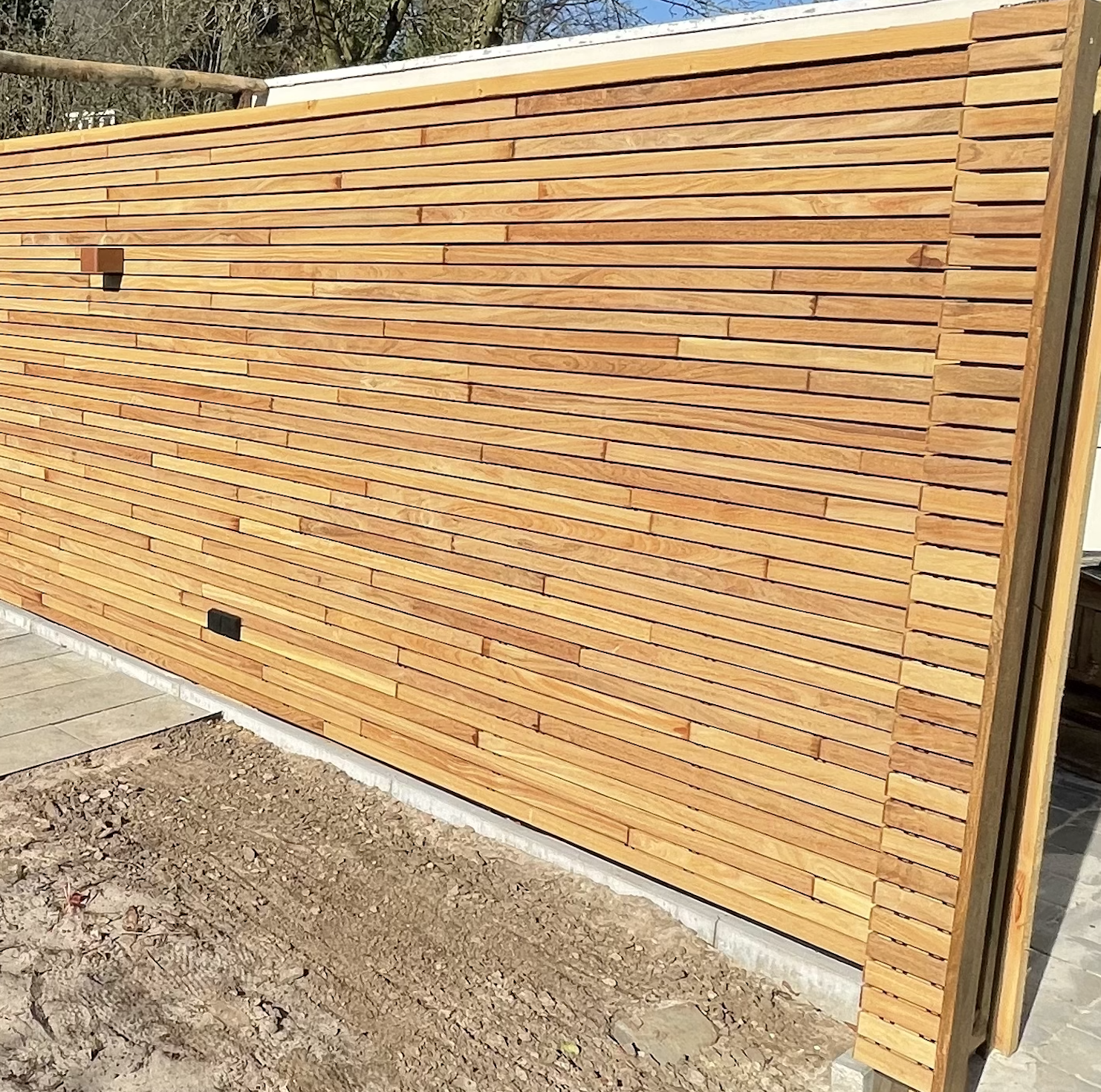
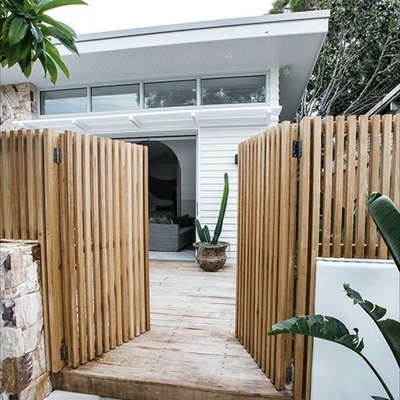
For any garden project where durability and strength matter, Ipe hardwood is the ideal solution. We supply it mainly for decking boards and hardwood fencing, though it can be used for many other garden projects, and beyond. Ipe's stability is genuinely outstanding: it shrinks and expands only minimally with temperature changes, making it perfect for the UK's changeable climate of rain and sunshine.
Sustainability and certification
Ipe wood comes from tropical rainforests, but at Hardwood Discount it's sourced responsibly.
Browse our range of Ipe hardwood products
Now that you know what Ipe wood is and why it's so special, you'll understand exactly why we're so enthusiastic about it. As a specialist Ipe timber merchant, we supply decking boards, fence slats and individual planks for your own project.
Not sure what suits your garden? Send us a message and we will help you choose. Or order directly online and we'll deliver within 7 to 14 working days.
Ipe in numbers: the key facts
Why does Ipe wood perform so well outdoors?
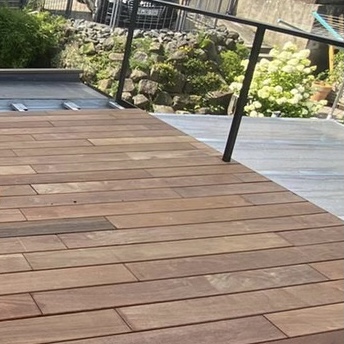
Ipe is a tropical hardwood species known for its exceptional density, hardness and natural resistance to decay. This combination makes it ideal for outdoor applications where strength, stability and a long service life matter.
That said, the properties of the timber are only the starting point. The final result also depends on selection, drying, milling, installation and maintenance. Even a naturally very durable species needs to be processed carefully to stay beautiful and stable for years.
Ipe's heartwood has a high natural resistance to fungi, insects and rot. As a top-tier durability class species, it can be used long-term in environments exposed to rain, sun, frost and fluctuating humidity. At around 1,050 kg per m³, Ipe is considerably denser and harder than many other timber species, giving it excellent wear resistance.
Two products can both be sold as Ipe and still differ enormously in appearance and workability. One board might be straight, correctly dried and precisely planed, while another is warped, damaged or poorly profiled.
The timber's natural lifespan stays high either way, but poor selection or processing can make installation harder and hurt the final result. That's why we assess Ipe not just by species, but also by dimensional accuracy, drying, planing quality, profiling and visual grade.
Four factors determine the real value of Ipe
1. Species
Natural hardness, density and resistance to decay.
2. Product quality
Selection, drying, dimensional accuracy, planing and profiling.
3. Origin
A legal, controlled and traceable supply chain.
4. Installation
Correct fitting, suitable fixings, ventilation and periodic care.
Natural lifespan describes how well Ipe resists biological decay. Origin tells you where the wood comes from and whether the supply chain is demonstrably legal and controlled. A long lifespan doesn't automatically make a timber product responsible. A full assessment needs to consider natural performance, product quality and the traceability of its origin together.
Ipe in pictures: applications & details
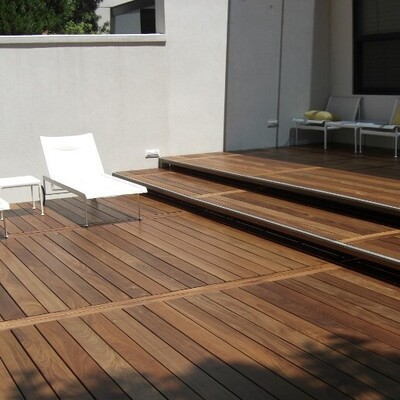
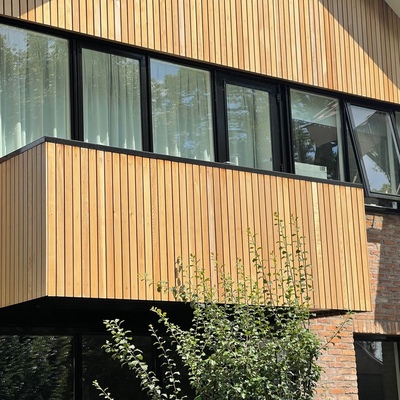
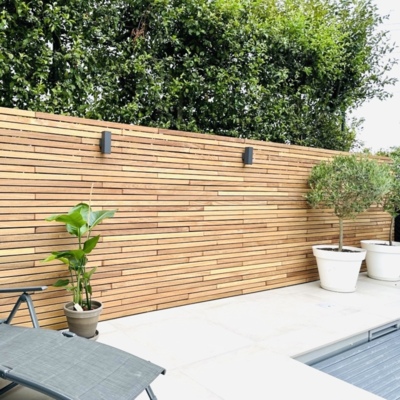

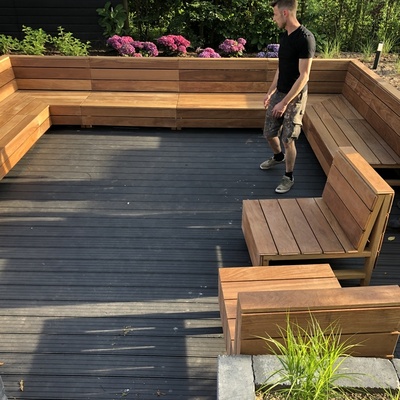
What we look for when selecting Ipe
- Drying suited to use in the UK outdoor climate
- Straight boards and slats with consistent dimensions
- An evenly planed surface and precisely finished edges
- Limited cracking, damage and unwanted warping
- Correctly milled side grooves and matching end joints
- A suitable selection based on grain structure and visual grade
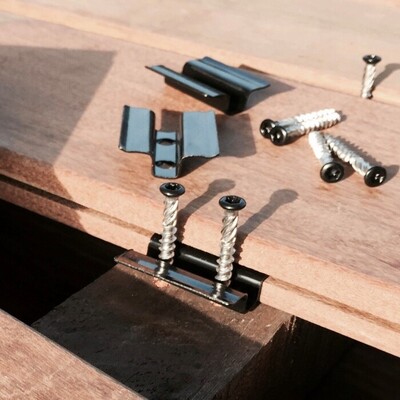
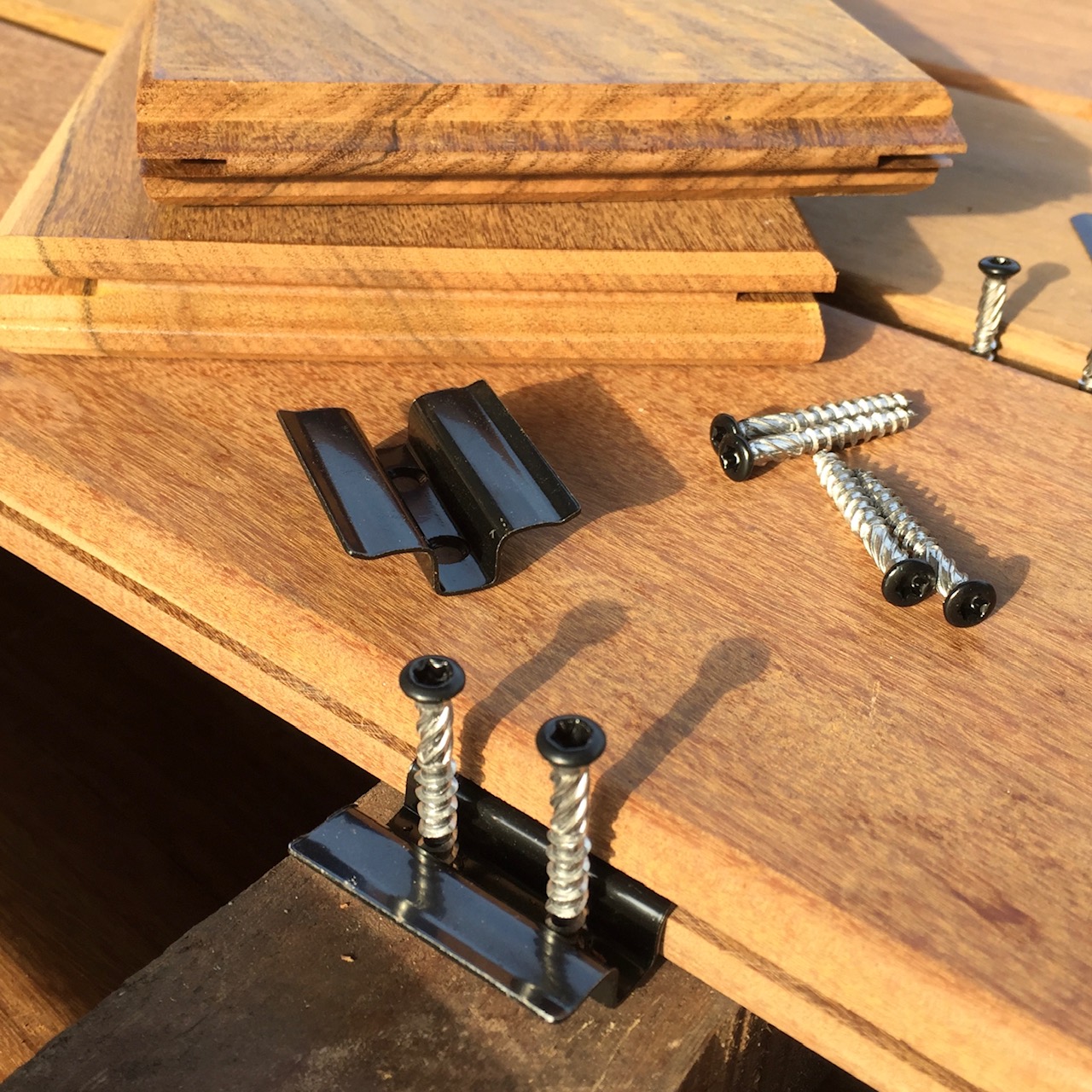
- Appropriate stainless steel fixings for the chosen application
- A demonstrably legal and controlled origin
Frequently asked questions about Ipe wood
Why does Ipe get oiled despite being so durable?
Ipe doesn't need oiling to retain its durability. That natural resistance is already built into the heartwood. Oil serves a different purpose: it protects the surface, slows rapid moisture changes and helps preserve the original brown colour for longer. Without oil, Ipe gradually turns silver-grey under UV exposure.
Does a long lifespan automatically mean a responsible origin?
No, they're two different things. Natural lifespan describes how well Ipe resists biological decay. Origin tells you where the wood comes from and whether the supply chain is demonstrably legal and controlled. Both matter for a complete assessment.
Is everything sold as Ipe the same quality?
No. Two products can both be sold as Ipe and still differ enormously in appearance and workability, depending on selection, drying and planing quality. That's why we assess Ipe not just by species, but also by dimensional accuracy, profiling and visual grade.
How heavy and how durable is Ipe wood exactly?
Ipe weighs around 1,050 kg per m³ and falls under durability class 1, the highest rating. With correct selection and installation, Ipe lasts 25+ years.
Is Ipe the same as Brazilian Walnut?
Yes. "Ipe", "Brazilian Walnut" and "Ironwood" are all trade names for the same South American hardwood species (Handroanthus). There is no difference in the timber itself, only in which name a supplier chooses to use.
Tags for this article: