
How to store veranda timber before you build it
Why storage matters so much
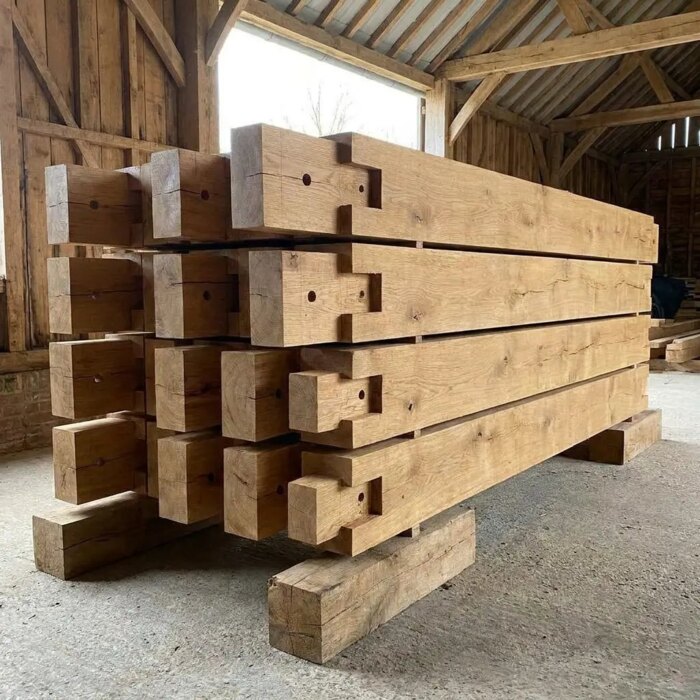
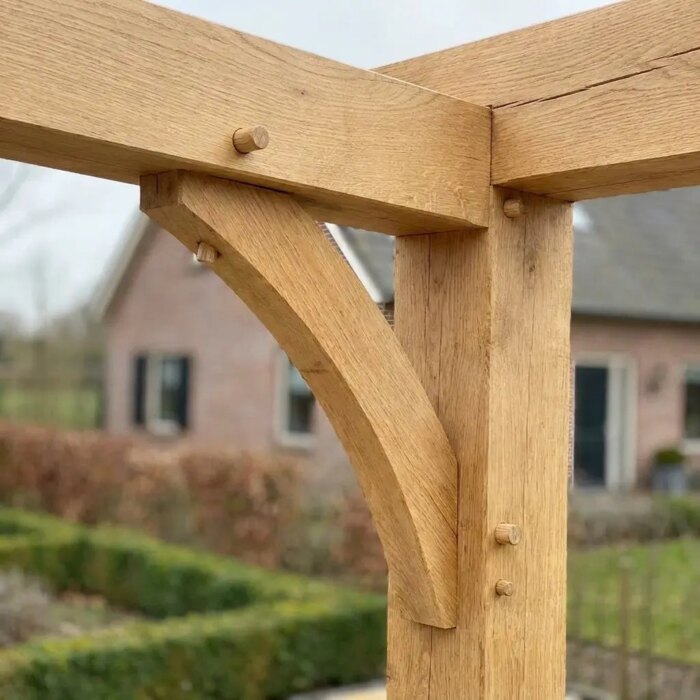
Our traditional verandas are made from solid oak or Douglas fir, cut to measure and pre-cut with mortise and tenon, half lap and dovetail joints. On site you simply drive the wooden pegs into the pre-drilled holes. The frame goes up without a single screw. That only works if every tenon still fits its mortise the way it did on the day it was cut.
Solid timber is a natural material. If it suddenly dries out fast, say after a few days in full sun, it starts to move. Oak in particular tends to distort and check as it dries. A joint that closes neatly today could start to bind. Storing it properly keeps that risk small.
How to store the timber
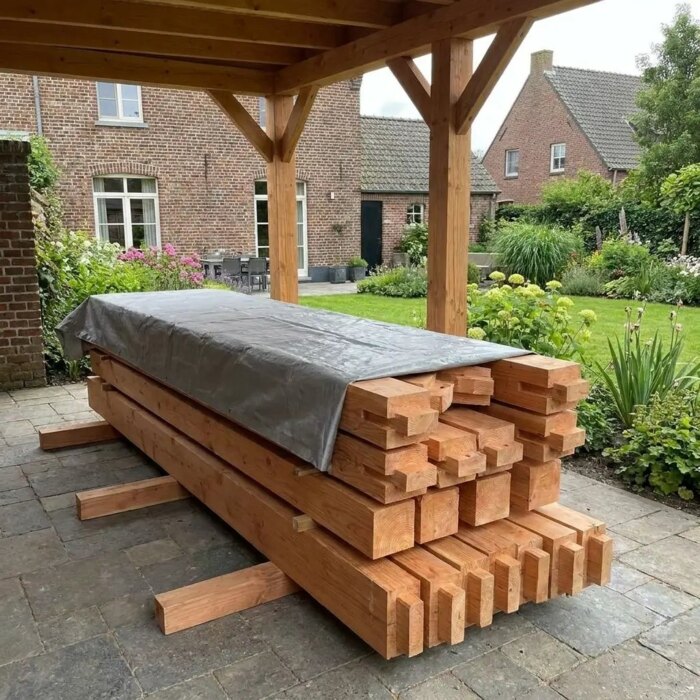
- Keep it covered, ideally under a lean-to, carport or in a barn. Keep sun and rain off the timber as much as you can.
- Leave the sides open. A tarpaulin over the top is fine, but do not wrap the whole stack. It needs air around the sides.
- Stack it tight, without sticks between the layers. Packed close together, the beams dry slowly and evenly.
- Keep it off damp ground. Lay a few bearers across and stack the timber on those.
Oak or Douglas fir: any difference?
The advice is the same for both. It matters even more with oak, because it moves more when it dries quickly. Oak also contains tannin, which can leach out and leave stains. Another good reason not to lay it straight onto pale paving.

Why build within 1 to 2 weeks?
The less time the timber spends lying around unbuilt, the less chance a joint will bind. Once the frame is standing, the joints hold each other in place. So plan the build before the timber arrives:
- With a traditional veranda the footings go in first. Their position and height are set out with a laser, so get that done well before delivery day.
- Line up 2 or 3 people to help. Some DIY experience is needed.
- Clear a dry spot with room for the full lengths.
A short checklist for delivery day
- Check every numbered part against the building drawing.
- Stack the frame tight on bearers, under cover.
- Put the tarpaulin over the top only.
- Ordered cladding, roof boards or a door as well? These come as loose parts in full lengths. We do not cut them to length, because you could not then fit them without gaps. Store them the same way.

Frequently asked questions
Can the timber sit outside under a tarpaulin?
For a short while, yes, as long as the tarpaulin only covers the top and the stack is off the ground. A lean-to or barn is better. Wrapped up completely in plastic, the timber cannot breathe, so we would advise against it.
What if I cannot build for another month?
Then time the delivery to suit your plans. A made to measure veranda takes around 8 weeks from approval of the building drawing, so you can book in the build well ahead. Read how the drawing comes together in bespoke oak veranda design.
For the build itself, see installing a timber veranda. You can also browse our oak frame kits and wooden veranda kits. Once the frame is up, read about treating oak outdoors.
Tags for this article: