How to Remove Green Algae from a Fence
In short: to get green algae off a wooden fence, use lukewarm water, a stiff brush and, if needed, a cleaner made for hardwood. Scrub along the slats and rinse with clean water. Avoid bleach. A thin coat of oil afterwards makes it harder for new algae to take hold.
What is the green stuff on my fence?
It is a layer of algae, sometimes with moss, growing where the timber stays damp for long periods. You see it most on north-facing fences, under trees and just above the ground, where splashback and little sun meet. On Ipe it stays on the surface. The wood will not rot from it, but the fence looks grubby and feels slimy.
How to remove green algae from a fence in 5 steps
- Brush dry. Clear leaves, cobwebs and loose dirt first.
- Wet it. Soak the fence with lukewarm water from a watering can or hose.
- Apply a cleaner. Light algae comes off with water alone. For stubborn patches, use a cleaner suitable for hardwood and leave it for a few minutes without letting it dry.
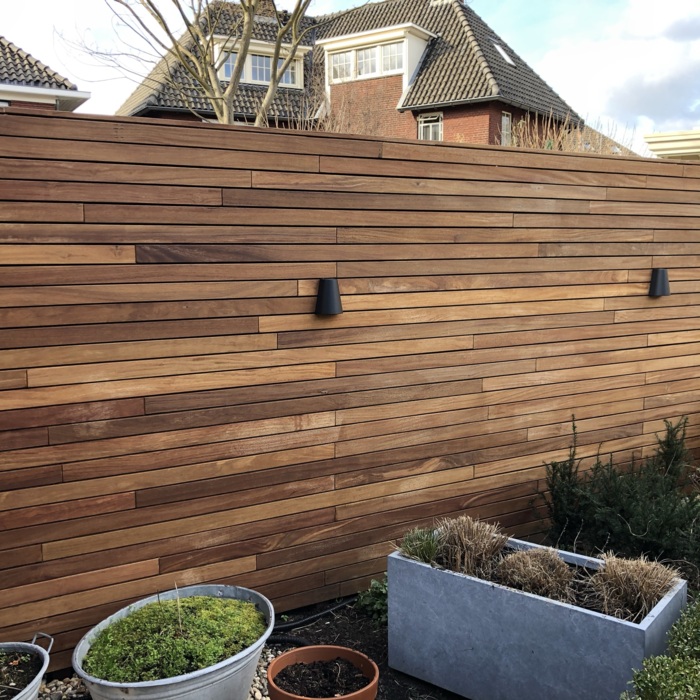
- Scrub. Use a stiff brush along the length of the slats, which cleans the 5 mm gaps at the same time.
- Rinse. Wash everything down with clean water and let the fence dry over a few dry days.
Can you use a pressure washer?
Yes, with care. Use a flat fan nozzle, keep at least 30 cm away and work along the grain. A rotating turbo nozzle or a jet held too close roughens the fibres, and rough timber gets dirty again faster.
What not to use
- Bleach: it damages the wood and the plants along your fence.
- Patio algae cleaners: they are made for stone, not timber.
- A wire brush: it scratches the surface and can leave metal particles behind.
Has the fence gone grey as well?
Grey and green are two different things. Green is algae you wash off. Grey is the natural silver patina Ipe gets from sunlight. It does no harm and the fence lasts just as long. If you want the warm brown colour back, a wood reviver or deck brightener removes the grey top layer.
Stopping the algae coming back
Ipe does not need oil to last 25+ years. Oil is still good advice if you want to clean less often. Think of it as wax on a car: dirt and water stick less, and the wood stays more stable, with fewer hairline cracks in very wet or hot weather. Apply a hardwood oil thinly to a clean, dry fence.
- Cut back plants growing against the fence so air can circulate.
- Keep soil and leaves away from the bottom slats.
- Give it a quick clean twice a year, in spring and autumn.
Cleaning a deck works much the same way. See our full guide to hardwood decking maintenance.
Green fence questions
Why is my fence going green?
Damp and shade. Algae grows where timber stays wet, such as on the north side, under trees and near the ground.
How often should you clean a wooden fence?
Twice a year is enough for most gardens. A shady spot may need it more often.
Does green algae damage an Ipe fence?
No. Ipe is durability class 1 and does not rot from it. It is a matter of looks and grip.
Is it safe to use bleach on a fence?
We advise against it. Bleach damages the wood fibres and harms nearby plants.
Looking for a fence that needs very little care? Browse our Ipe fences.
Tags for this article: Montage tips