How Long Does a Solid Timber Framed Building Last? Maintenance Explained
An oak or Douglas fir framed building, garden canopy or patio cover is an investment meant to serve you for years — but how long exactly, and what upkeep does it need? The answer depends on the timber species, the foundation, and the maintenance routine you follow. On this page we explain what to expect from oak and Douglas fir, and the practical steps that extend the life of your structure.
Deliverytime UK
7 to 14 days delivery time
For Fence and Decking
Free delivery from £4300
Up to £4300 delivery charge £250
Parcel service (small box) delivery £26
- Free delivery from £4.300
- Delivery in 14 days
- Up to £4.300 delivery charge of £250
Ipe packages
Large timber bundles
Delivery time 6-8 weeks
Delivered in 15 days
Package L
From £ 4.300 free deliveryPackage XL
From £ 4300,- free delivery7 to 14 days delivery time
Package L
From £ 4300 free deliveryPackage XL
From £ 4300,- free delivery7 to 14 days delivery time
Package L
From £ 4300 free deliveryPackage XL
From £ 4300,- free delivery15 days delivery time
Package L
Delivery price on requestPackage XL
Delivery price on requestFramed Buildings · Maintenance & Durability
How Long Does a Solid Timber Framed Building Last? Maintenance Explained
An oak or Douglas fir framed building, garden canopy or patio cover is an investment meant to serve you for years — but how long exactly, and what upkeep does it need? The answer depends on the timber species, the foundation, and the maintenance routine you follow. On this page we explain what to expect from oak and Douglas fir, and the practical steps that extend the life of your structure.
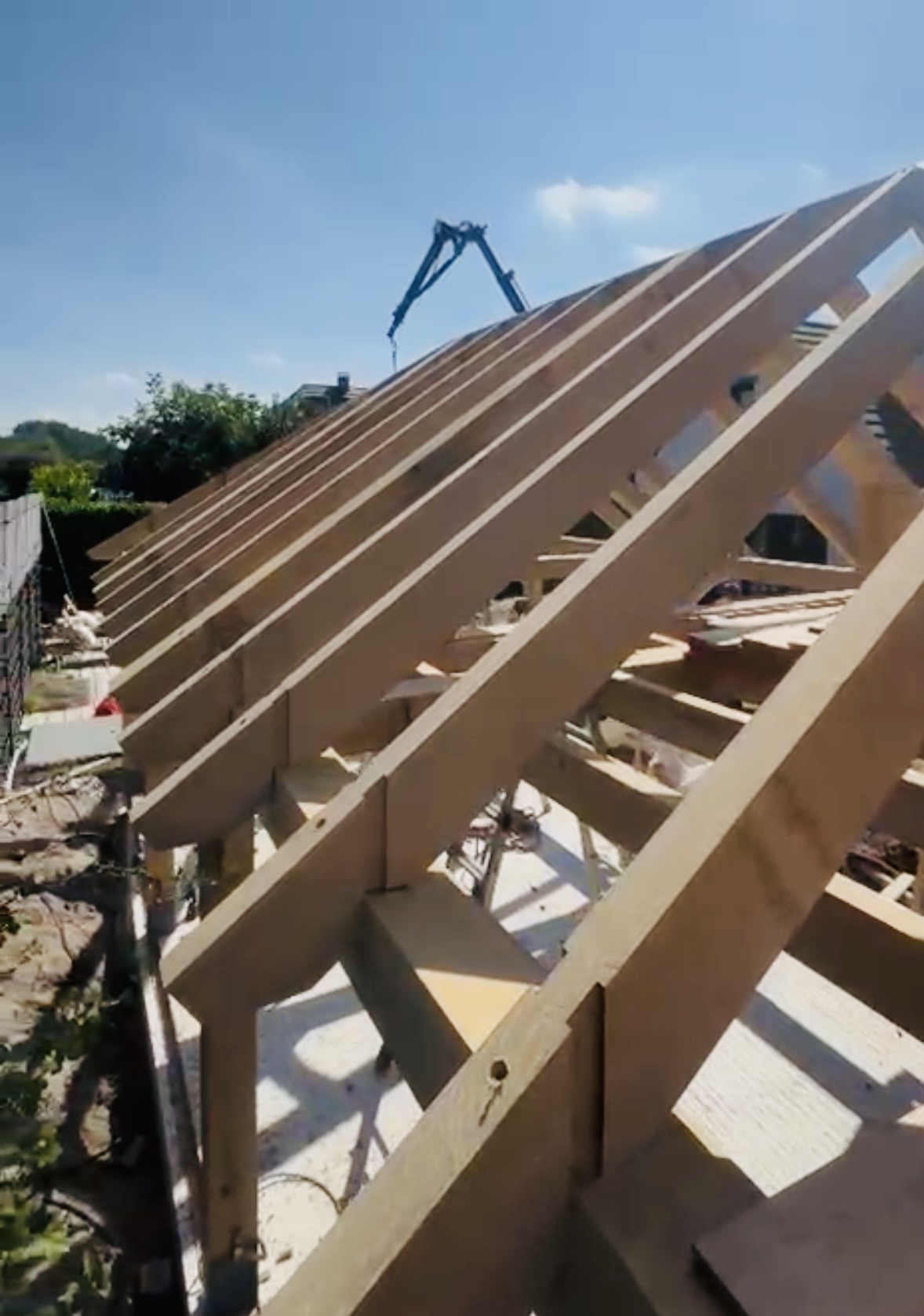
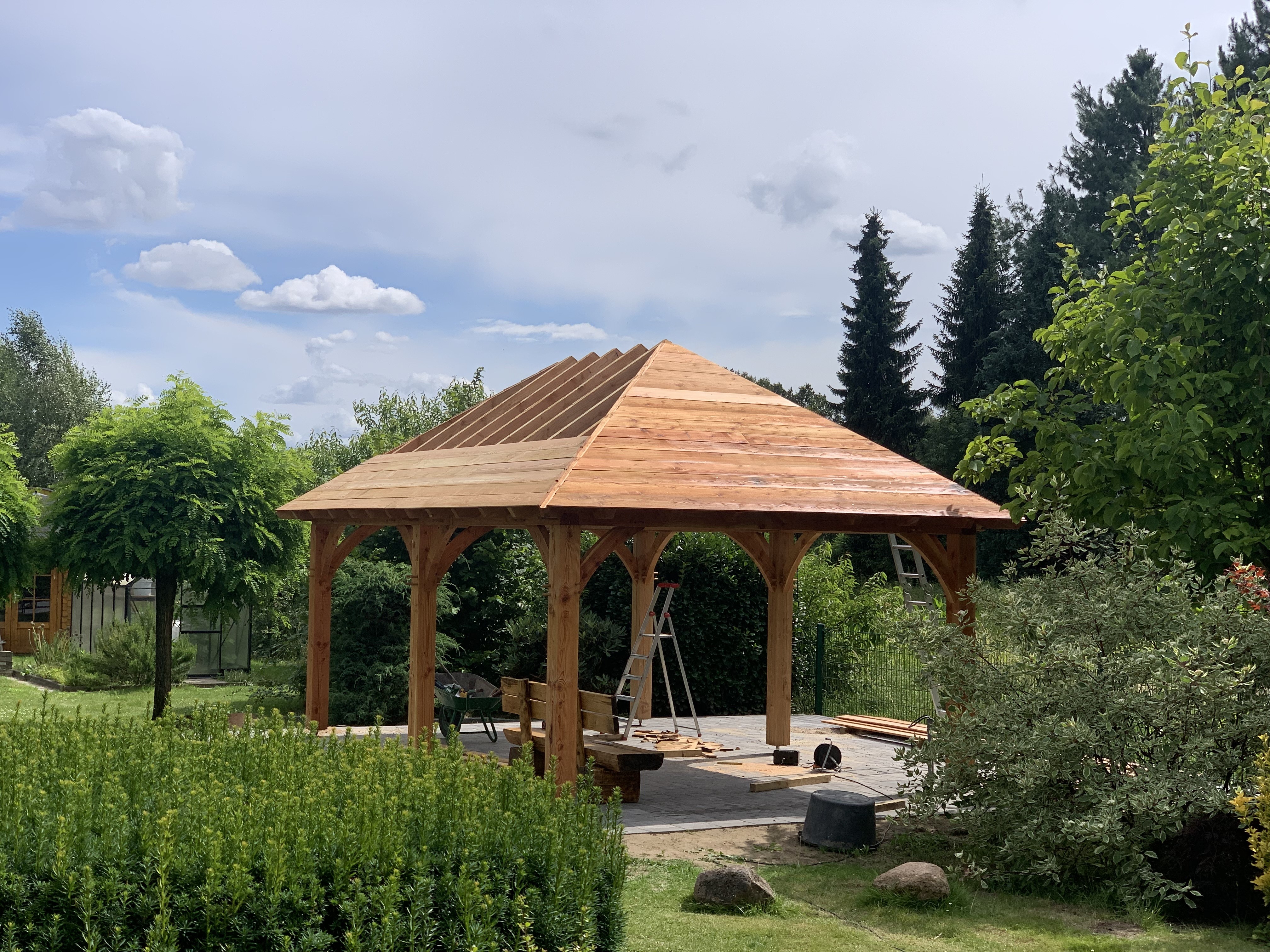
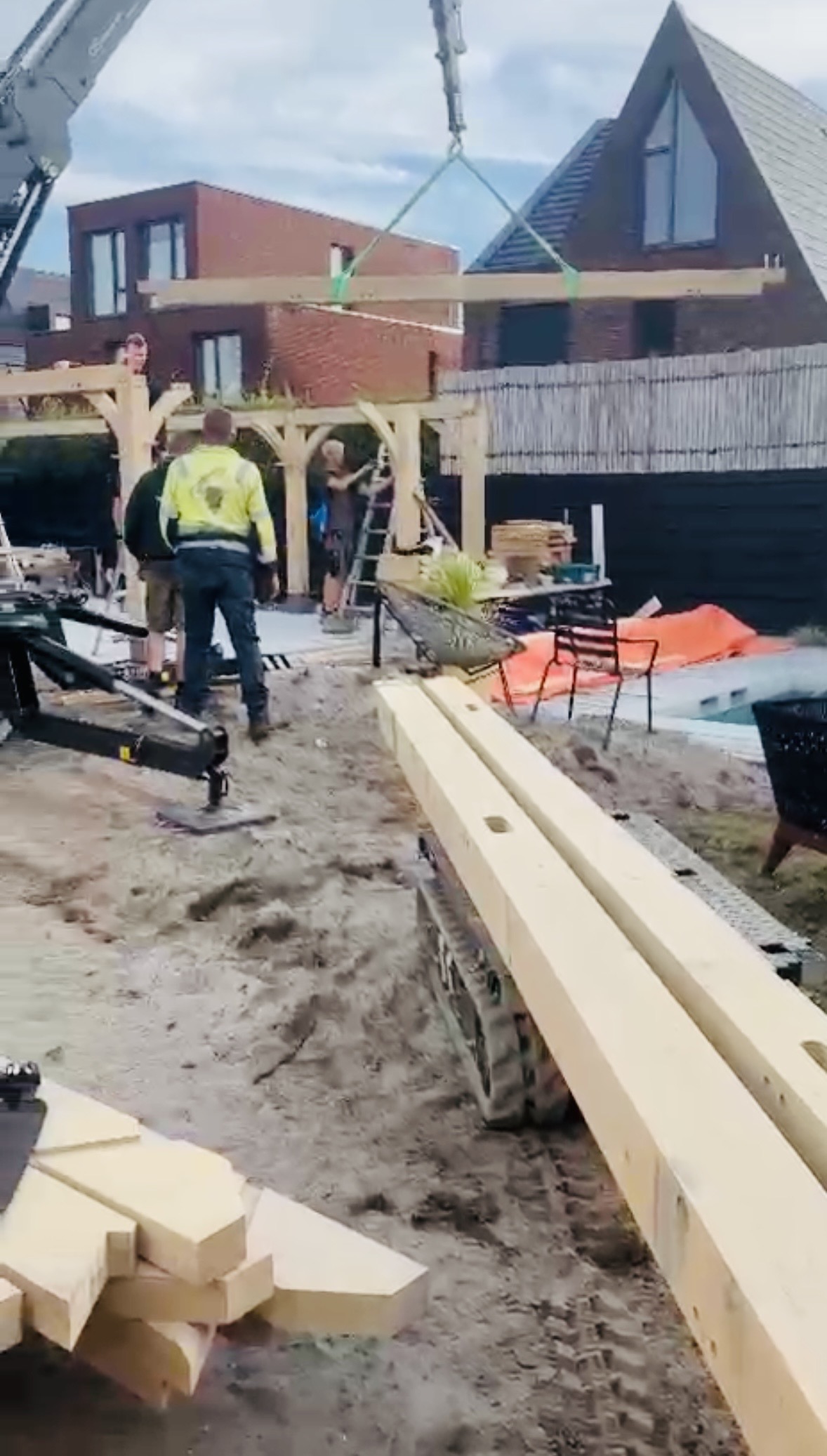
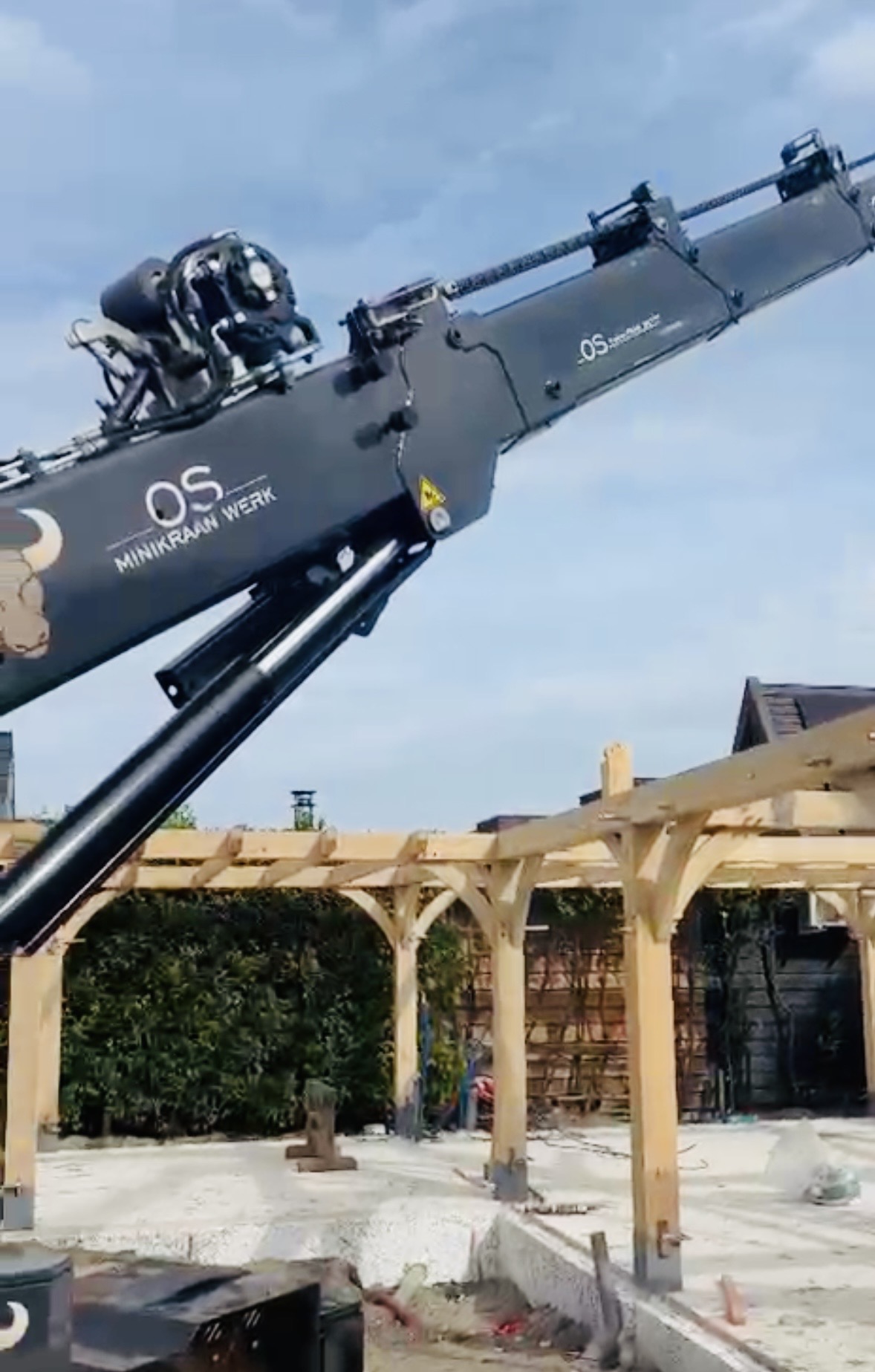
Craftsmanship You Can Trust
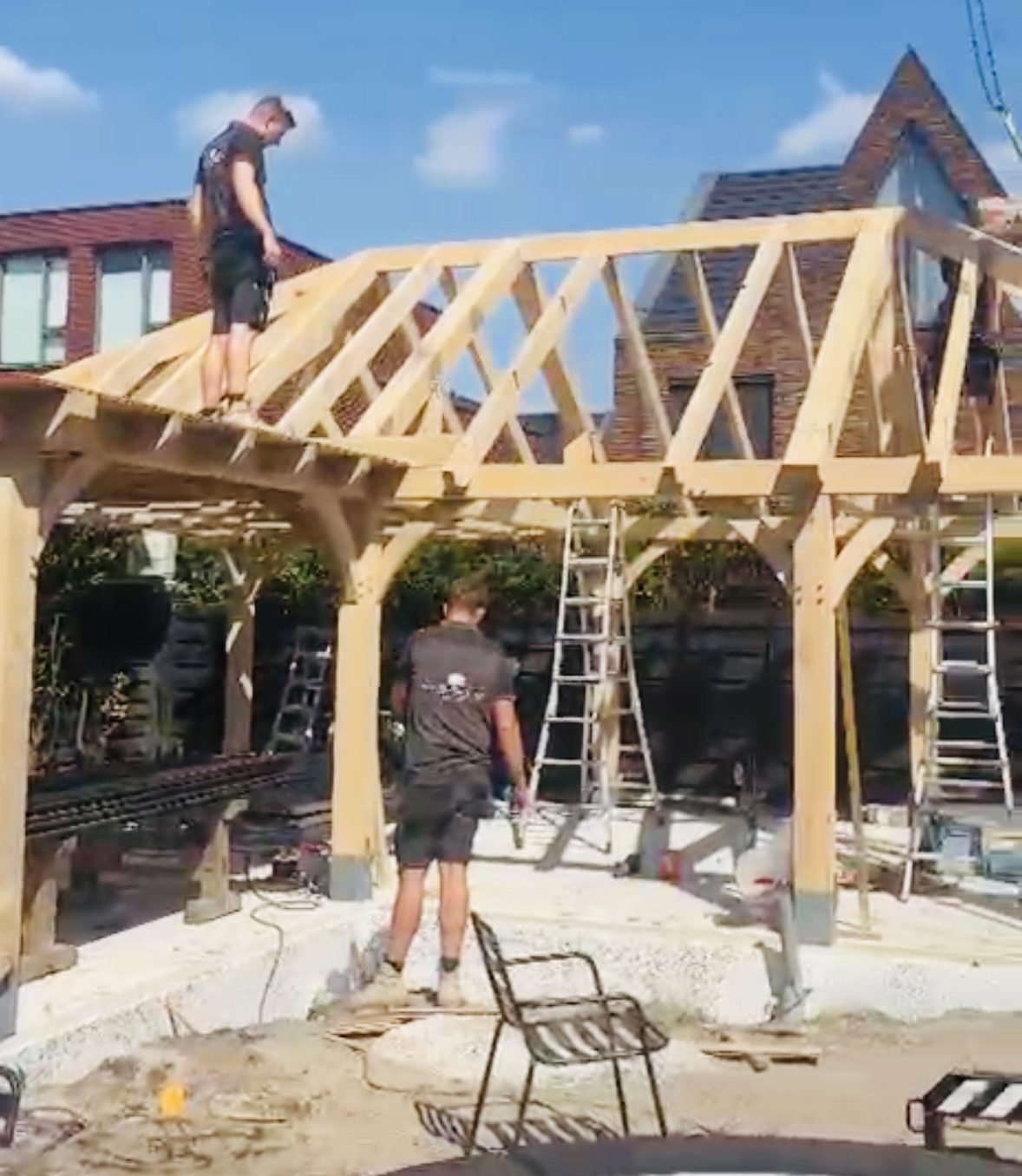
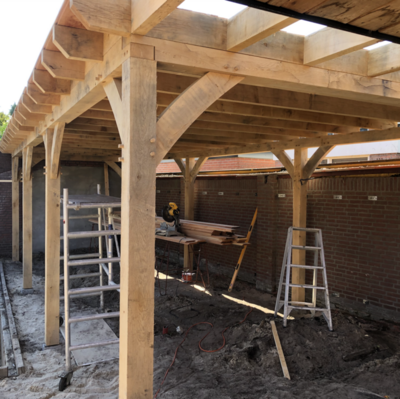
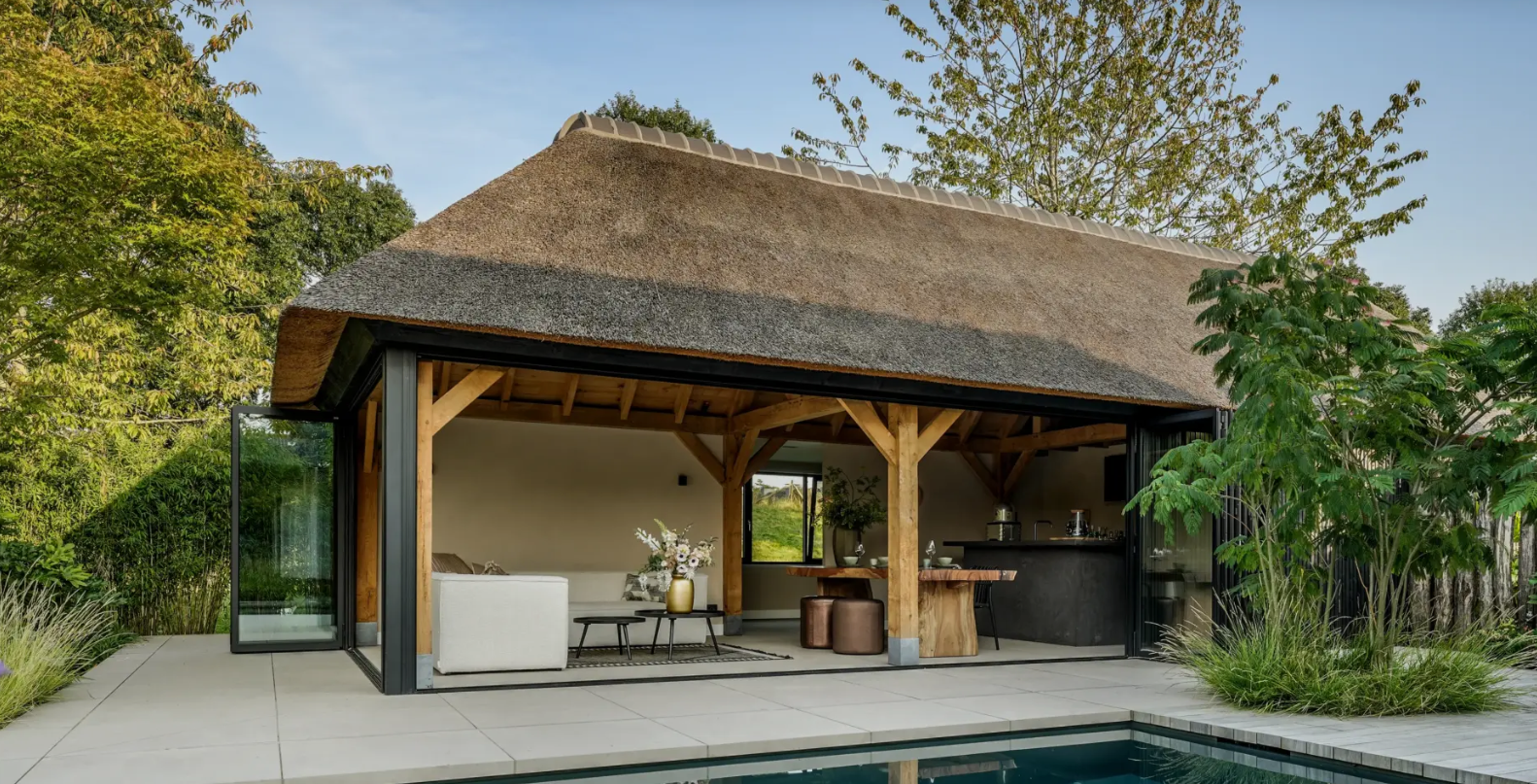
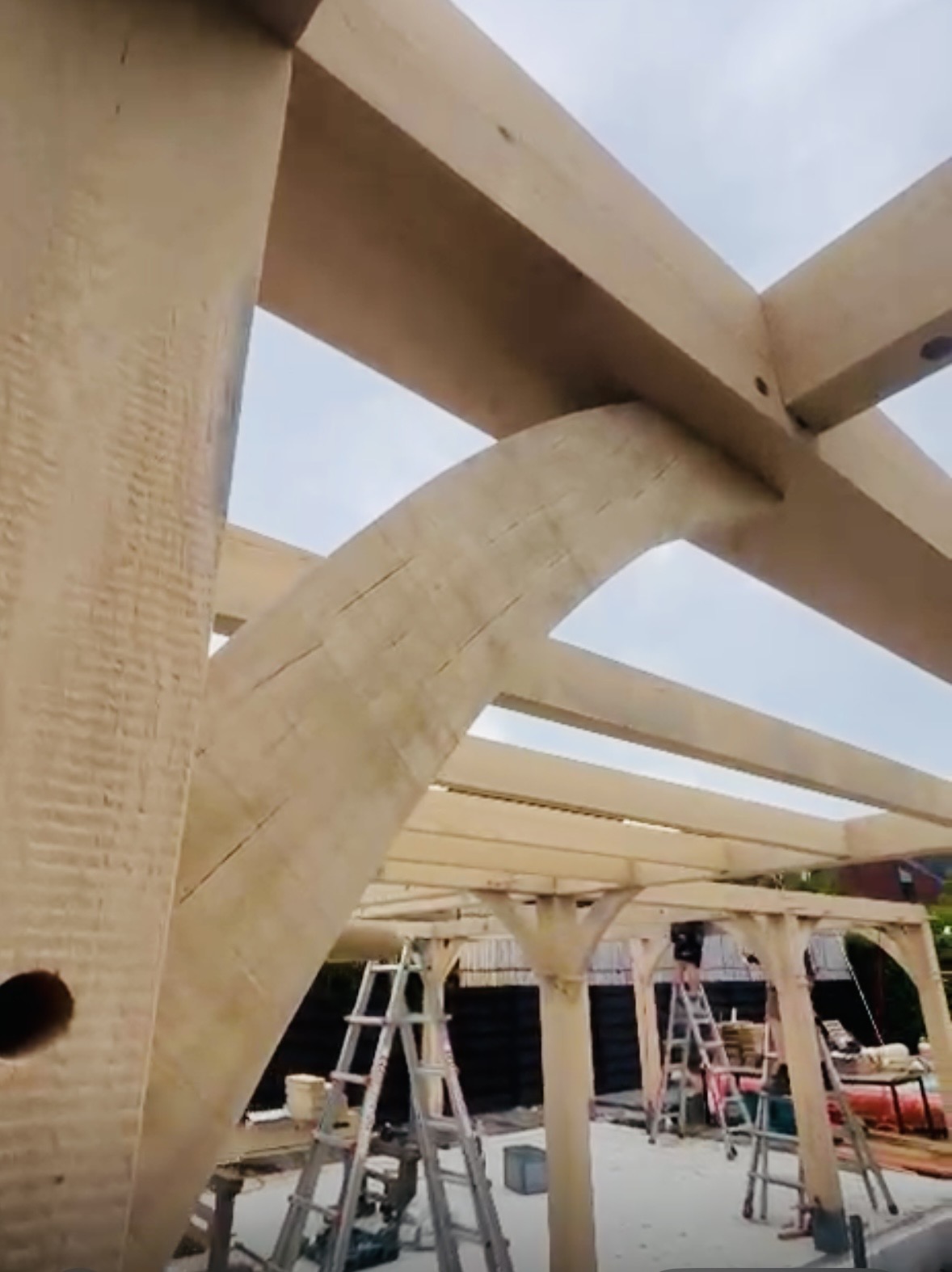
Durability starts long before maintenance — it starts with how the frame is built. Every structure we deliver is hand-jointed and erected with precision, the foundation for a framed building that lasts for decades.
More From the Workshop
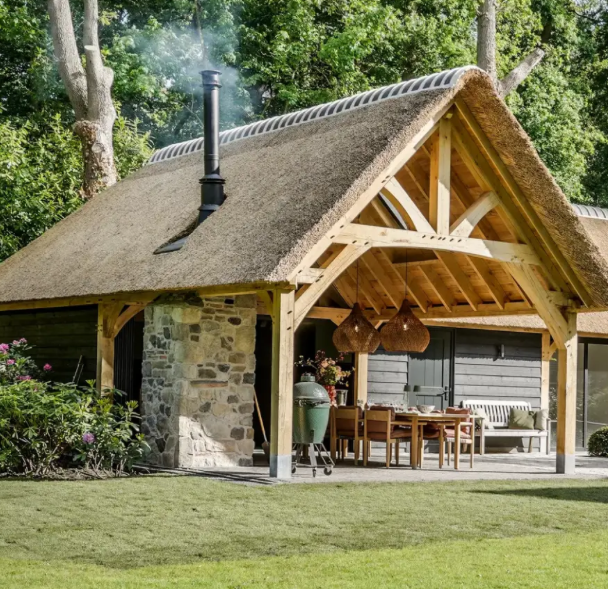
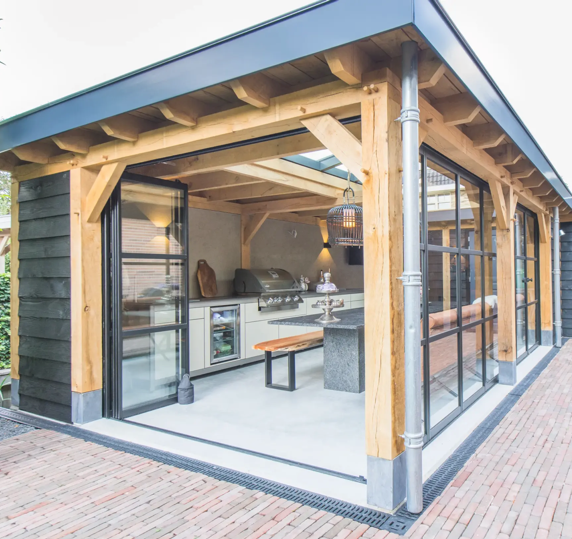
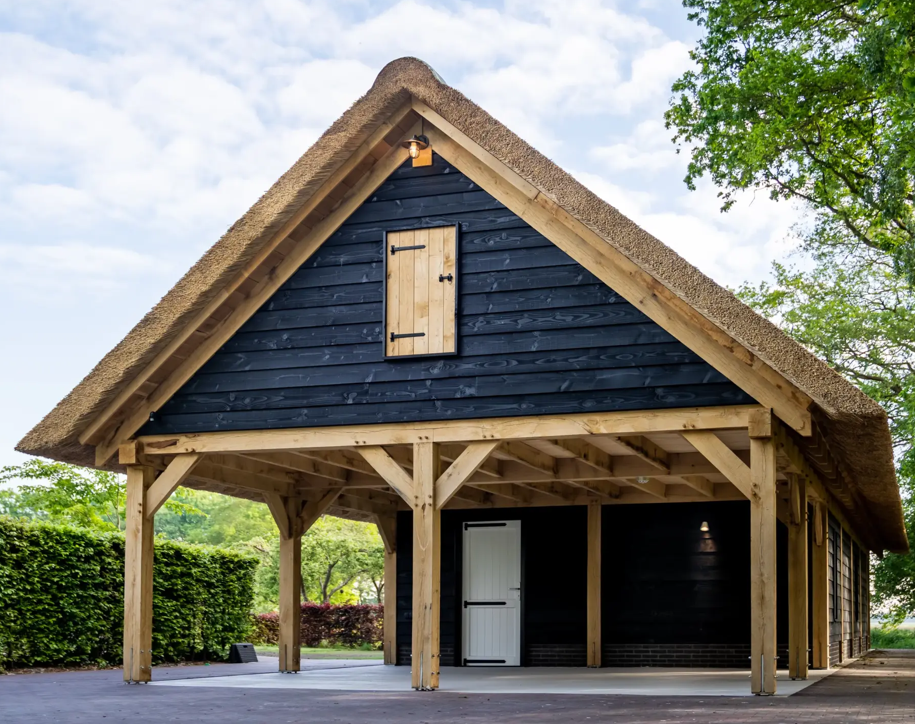
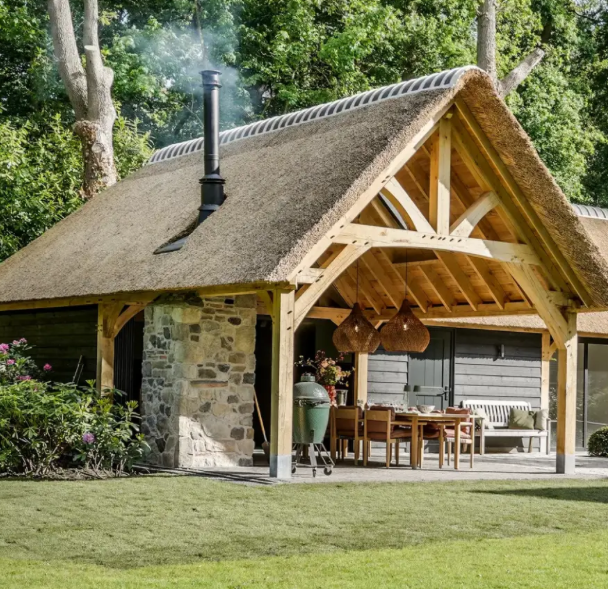
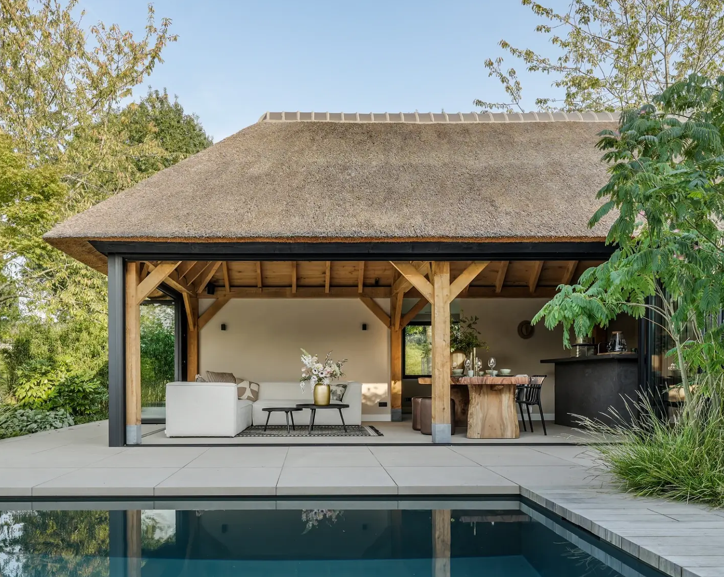
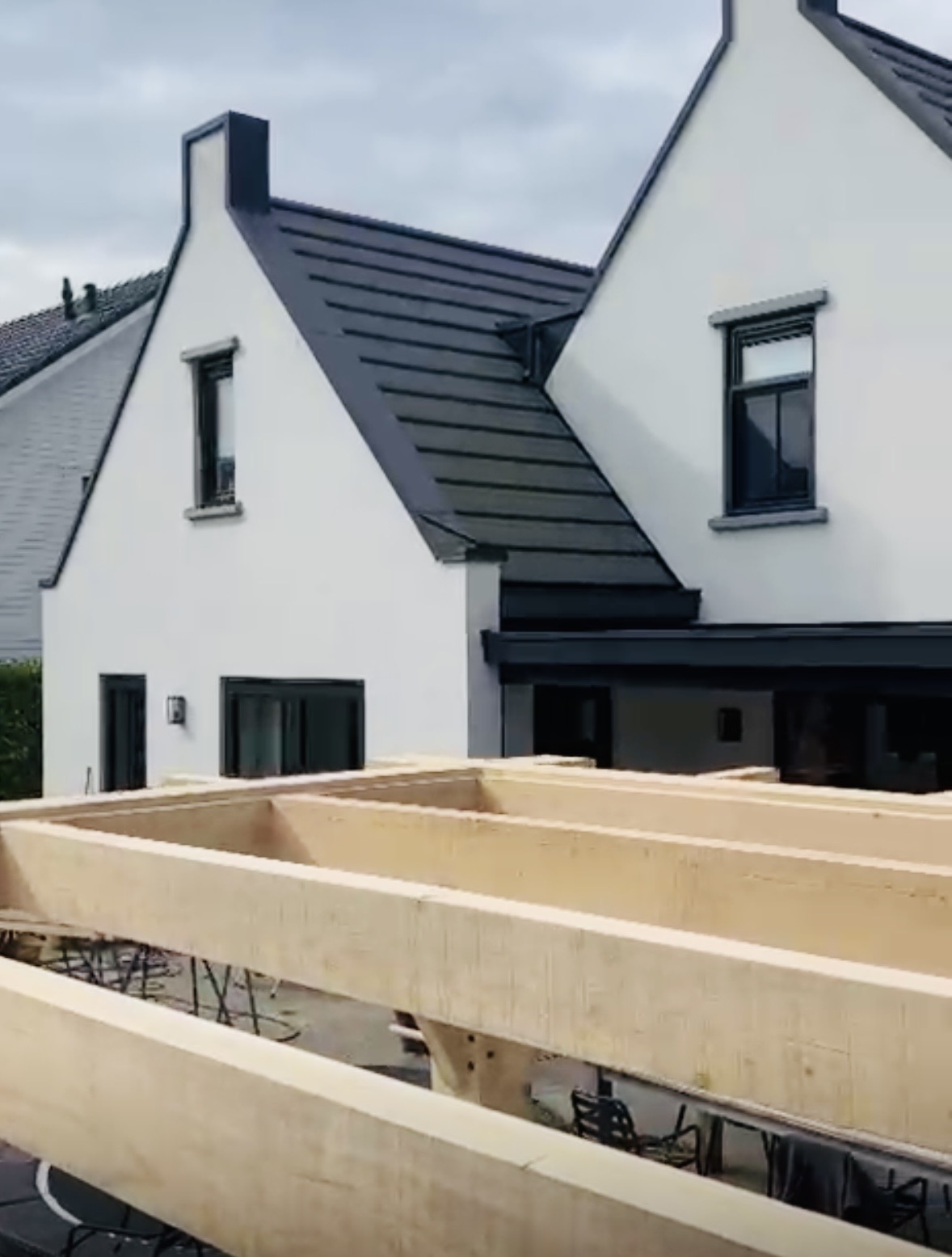
A broader selection of completed framed buildings and garden canopies, where sound craftsmanship and a solid foundation are always the basis for a long service life.
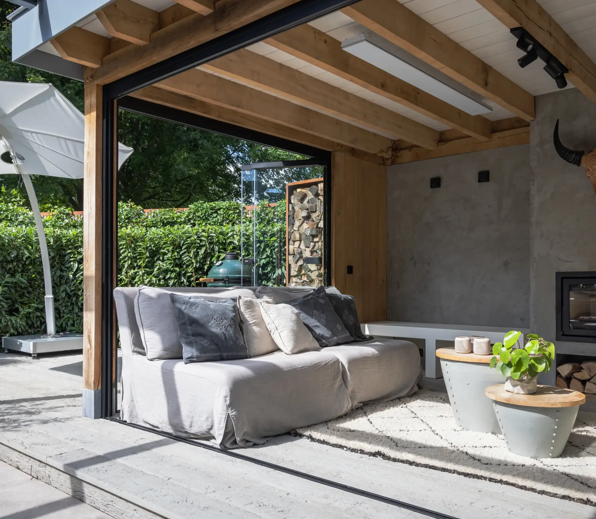
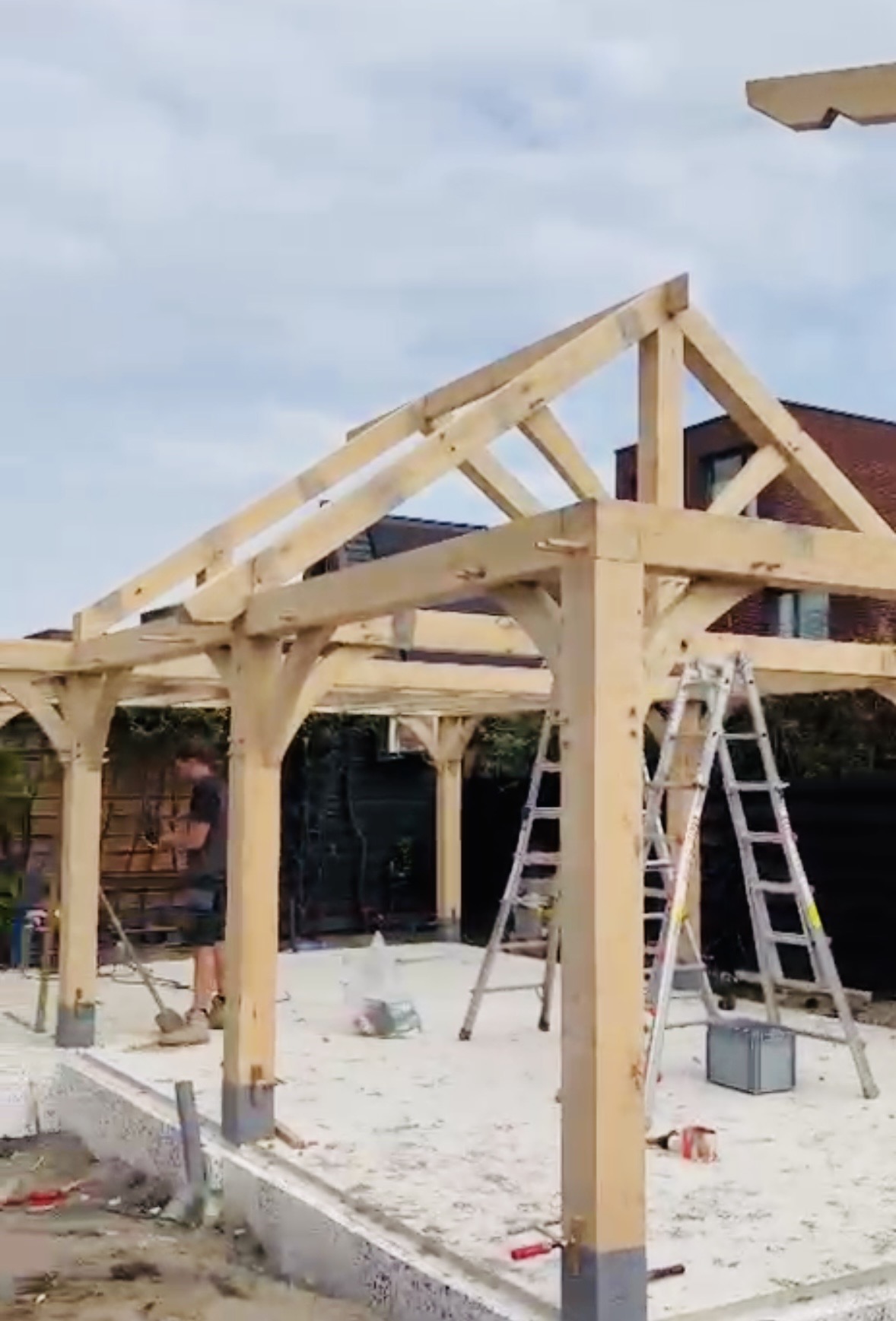
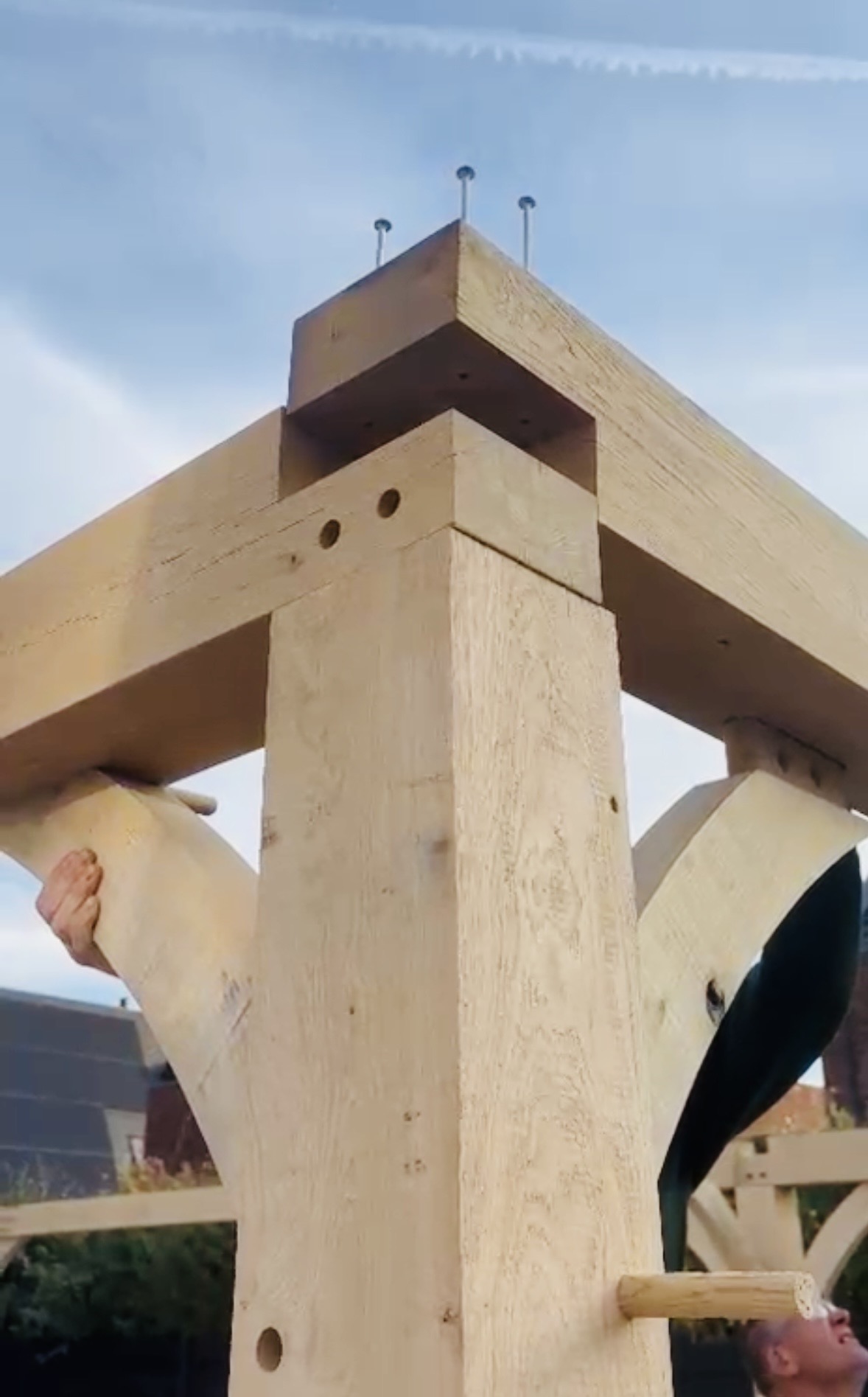
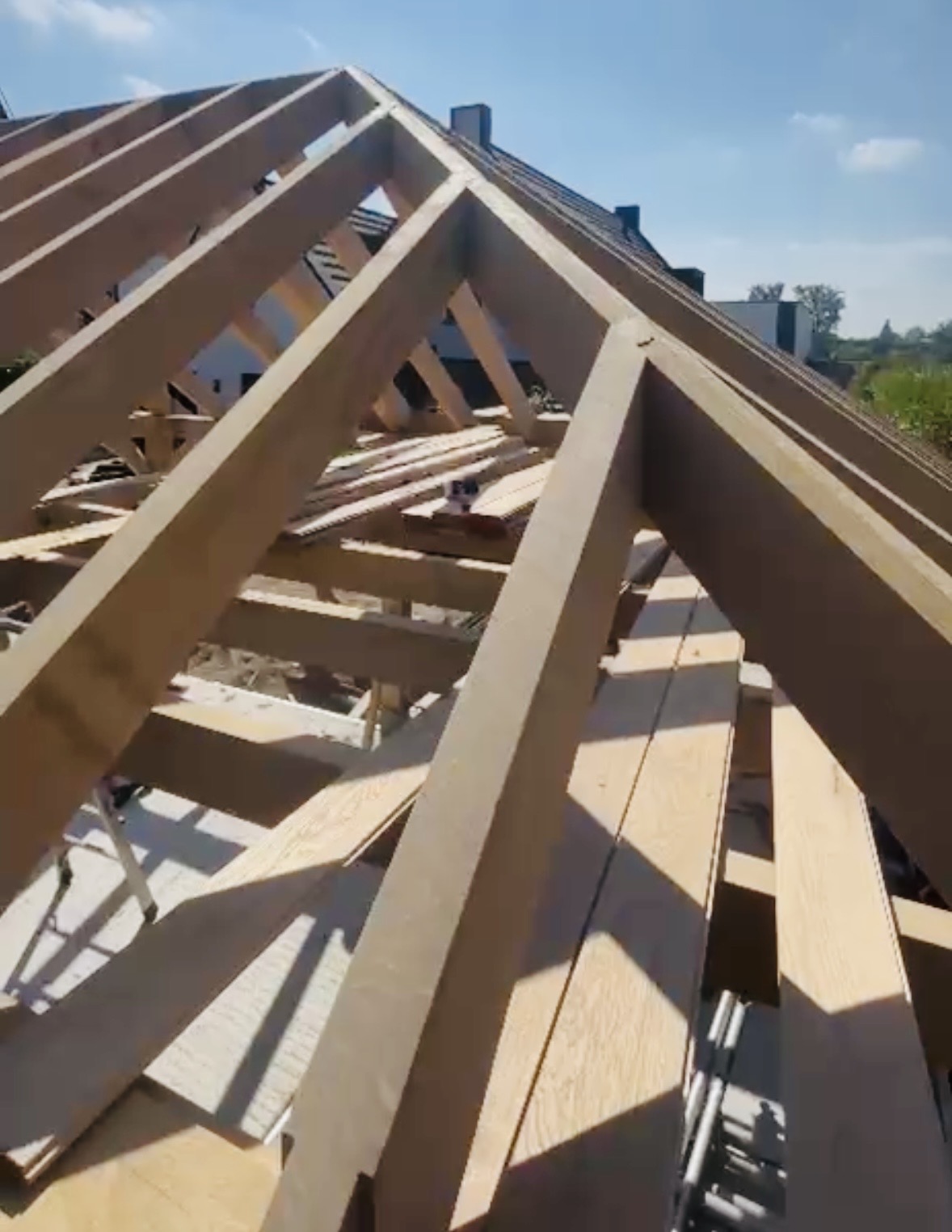
How Long Does a Solid Timber Framed Building Last?
With the right foundation and regular care, oak and Douglas fir framed buildings last for decades. The single most important factor is a sound base: posts sitting clear of the ground on concrete footings, rather than driven directly into the soil, prevent moisture uptake and rot at the base. That's exactly why our structures are fitted as standard on adjustable stainless steel base plates.
Oak or Douglas Fir: Which Maintenance Suits Which Timber?
Oak
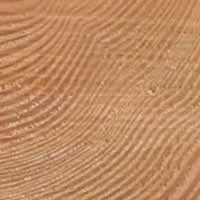
Oak is naturally highly durable and needs the least maintenance of all. Left untreated, it gradually weathers to a silver-grey patina — a purely cosmetic process that doesn't affect the structural strength of the frame. If you'd rather keep the original tone, an annual application of a UV-resistant wood oil will do the job.
Douglas Fir
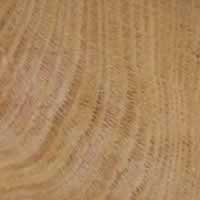
Douglas fir contains natural resins that guard the timber against moisture and decay, making it weather-resistant even left untreated. Like oak, unfinished Douglas fir will grey over time. To preserve the warm, honey-toned colour, we recommend a UV-filtering wood oil or stain, reapplied every two to three years.
Maintenance in Five Practical Steps
No Ground Contact
Keep posts clear of the ground on adjustable base plates — the single biggest factor in a long service life.
Annual Inspection
Check joints, roof covering and post bases once a year, ideally in spring.
Cleaning
Remove moss and algae with a soft brush and timber cleaner; avoid a pressure washer, which can damage the wood surface.
Oil or Let It Grey
Choose deliberately: periodic oiling to keep the colour, or leave it untreated to weather naturally into a low-maintenance grey.
Roof Drainage
Keep gutters and roof edges clear of leaves so rainwater drains freely and doesn't sit on the timber.
Greying: A Sign of Ageing or of Quality?
A common misconception is that greying means the timber is deteriorating. It isn't: greying is a purely cosmetic, natural process in which UV light breaks down the outermost wood fibres, while the core of the timber retains its full strength. On solid oak, this silver-grey patina is often deliberately valued as part of the timeless, hand-crafted character of the frame.
We're Happy to Advise
Not sure which maintenance routine suits your specific structure, timber species or location? We're happy to help you work out a maintenance plan that matches the look and level of upkeep you want.
Frequently Asked Questions About Maintenance
Do I need to treat my framed building every year?
No, it's not compulsory. Untreated timber weathers to grey naturally without losing any strength. Only if you want to keep the original colour will you need to oil it periodically.
Is greying harmful to the structure?
No, greying is a surface-level process caused by UV light and does not affect the structural strength of the timber.
What matters most for a long service life?
A sound foundation with posts sitting clear of the ground on adjustable base plates, so there's no direct ground contact or moisture uptake.
Can I use a pressure washer?
This isn't recommended: the high pressure can damage the wood fibres. Use a soft brush with timber cleaner instead.